

Inflationary Finishing – Thoughts on Fake Casks and Booming Business Models
In the world of spirits, the topic of finishing has been experiencing a veritable boom for years. In principle, there is nothing wrong with this—provided it is done properly. A long, clean pre-filling over several years can lend a cask depth, character, and authenticity. But this is precisely where the problem begins.

When Pre-Filling Becomes a Marketing Tool
Demand for visually perfect, technically flawless casks with the most spectacular possible backstory is enormous. Customers ideally want a 30-year-old cask, pre-filled with port, sherry, or cognac—preferably available immediately. In practice, however, this is hardly achievable.
Because: Such casks simply do not exist in the required quantities. Nevertheless, a business model has emerged from this wishful thinking. Pre-filling becomes a commodity, history a sales argument—often without any real substance.
A Current Example from Practice
I would like to illustrate this with a concrete case that I am currently experiencing myself: the search for casks from a Pineau des Charentes filling.
Pineau des Charentes is not a classically fermented wine but a so-called liqueur wine. It is produced through what is known as mutage: fresh, unfermented grape must is fortified with young cognac (wine spirit), which immediately halts fermentation. The natural sugar of the must is retained while the alcohol content rises significantly. Only after this assemblage does Pineau des Charentes mature over an extended period—traditionally in used cognac casks made from French or European oak, under oxidative conditions. These casks are therefore not an interchangeable by-product but an integral component of the style, aromatics, and authenticity of the product.
I received the delivery order as early as summer 2025, with a delivery date set for February 2026. The customer requested 450-liter casks. Pineau des Charentes is a regional specialty from southwestern France, traditionally based on cognac casks that have been used for many years. Only after this maturation phase is grape must added and the product assembled.
This product is—if anything—roughly comparable to sherry. It is a specialty with limited production and by no means a product intended for large-scale retail or discount markets.
I eventually found a small number of suitable casks: stored in an old, damp cellar, but technically in a condition that required a complete overhaul of each individual cask. The price? High—perhaps even overvalued. But the owner was well aware of the originality of his goods.


The Countermodel: Industrial Pre-Filling
At the same time, there are large wineries and bodegas—particularly in France and Spain—that have turned cask pre-filling into an industrial model. They purchase truckloads of used red wine casks, preferably from regions such as Rioja, where these are available in large quantities.
These casks are then filled with brandy, sherry, port, or Madeira for a few weeks and subsequently sold as “originally pre-filled casks.” Documentation is usually completely absent. Whether and how long genuine pre-filling took place is nearly impossible to verify. Legal requirements regarding minimum aging periods—such as those applicable to cognac or port—are frequently ignored.
Through brokers, these casks find their way to distilleries around the world. There they primarily serve one purpose: storytelling. The cask’s history becomes more important than the actual sensory outcome.
Quality Requires Knowledge—and Patience
They still exist: producers who consciously and successfully position themselves at the high end of the market. They select their ingredients—including casks—with great care and do not rely solely on invoices or the statutory minimum information provided by their suppliers.
Unfortunately, in many cases there is a lack of training and specialist knowledge. As a result, only a few users truly understand how strongly port wines or sherries differ within their respective categories. Especially with sherry, the sensory range is vast—yet it is often neither recognized nor utilized.
Good Casks Are Rare—and Will Remain So
Returning to the initial question: truly good, sustainably pre-filled casks are rare. And they are expensive. That will not change in the future—regardless of the current tense market situation.
The market is currently undergoing a noticeable correction. Many suppliers of fake casks are disappearing on their own. What will remain are those casks with genuine, long-term pre-filling. They will once again become something special—exactly as a good cask finish deserves to be.

How Can You Recognize a Genuine Cask?
One important indicator is a traceable “life story” of the cask. If this history exists and can be substantiated, it speaks in favor of authenticity.
Even more decisive, however, is sensory evaluation. A cask must be smelled, examined, and assessed. In my view, a thorough aromatic evaluation outweighs any written backstory.
Another characteristic:
A well pre-filled cask weighs around 10% more than a comparable new cask.
And finally, the plausibility of the wood type should always be examined:
- A bourbon cask with a single filling is always made of American oak.
- A cognac cask is traditionally made from French or European oak—never American.
Those who observe these fundamentals will recognize genuine quality—and will not be dazzled by pretty stories.


Pre-filled barrels

Fût de brandy usagé de 225 l - Les fûts sont en chêne francais et sont en bon état.Les fûts sont équipés en standard d'une bonde en bois ou en plastique usagée. Si vous souhaitez un nouveau bouchon en silicone, vous pouvez le commander sous accessoires (type Standard - C16). Fûts en bois ayant contenu du liquide : Des encoches dans le bois, fissures extérieures dues aux contraintes ou éventuellement un fond irrégulier ne sont pas un défaut de qualité mais plutôt des caractéristiques de bois qui viennent des particularités de la construction et l’usage antérieur des fûts. Ceci ne réduit pas la fonctionnalité du fût. Nous contrôlons soigneusement les fûts lors de contrôle de sortie pour détecter les défauts sensoriels et techniques. Nous n'assumons aucune responsabilité pour les fissures qui se produisent pendant la maturation. Une réparation possible et significative n'est pas un service de garantie. Le brandy n'est-il que le numéro 2? Je pense que non, je trouve les distillats surtout vieillis dans des fûts de chêne américain ou français, qui ont subi un premier passage au sherry, magnifiques. Mûris avec soin en solera ou, pour les grandes qualités précieuses, dans un fût pendant des années, voire des décennies, on assiste à de véritables feux d'artifice d'arômes gustatifs et à des fêtes pour le palais. Les brandies d'Espagne et du Portugal, dont nous achetons les fûts de brandy aux distillateurs, se caractérisent par des arômes de prune, de raisin sec, de caramel et, de manière positive, de bois d'acajou. Le brandy est un peu plus facile et plus accessible à déguster que le cognac, certainement en raison, comme nous l'avons déjà mentionné, du stockage dans des fûts de chêne américain qui, par nature, libèrent déjà une très grande quantité de vanilline dans le distillat pendant la maturation et, enfin, de l'influence du sherry provenant de ces fûts - c'est la douceur qui y est associée et qui fait du brandy un favori, et pas seulement pour les connaisseurs! De notre point de vue, il s'agit de l'un des fûts les plus riches en arômes pour le réassort, avec une finesse profonde, un flatteur pour la bouche pour les distillats et les bières suivants dans le réassort.

Fût de vin rouge fraîchement vidé, anciennement occupé par du pinot noir. Le fût était occupé par du pinot noir issu du vignoble Kirschgarten, classé Großes Gewächs. Origine : Vignoble VDP (Rhénanie-Palatinat)Tonneau livré avec bonde en bois ou en silicone Cercles : métalFûts en bois pré-utilisés : les entailles dans le bois, les fissures de tension extérieures ou, dans certaines circonstances, un fond inégal ne sont pas des défauts de qualité, mais sont plutôt déterminés par la particularité de la construction et l'utilisation préalable des fûts. La fonctionnalité du fût n'en est pas affectée. Lors du contrôle de sortie, nous examinons très soigneusement les fûts pour vérifier qu'ils ne présentent pas de défauts sensoriels ou techniques.Nous n'assumons aucune responsabilité pour les cracks ou les fissures qui apparaissent pendant la maturation. Une réparation éventuelle et raisonnable n'est pas une prestation de garantie.Toutes les images sont des exemples et des différences optiques sont possibles.

Fûts en barrique de chêne allemand ou français bien conservés et d'occasion. Les fûts sont nettoyés professionnellement à l'intérieur et à l'extérieur dans notre tonnellerie, rabotés et, la couche de bois libérée est chauffée sous un feu de chêne. Les barriques offrent une alternative aux barriques neuves pour votre distillat ou pour votre vin. Toast: Medium Les fûts sont équipés en standard d'une bonde en bois ou en plastique usagée. Si vous souhaitez un nouveau bouchon en silicone, vous pouvez le commander sous accessoires (type Standard - C16). Fûts en bois ayant contenu du liquide : Des encoches dans le bois, fissures extérieures dues aux contraintes ou éventuellement un fond irrégulier ne sont pas un défaut de qualité mais plutôt des caractéristiques de bois qui viennent des particularités de la construction et l’usage antérieur des fûts. Ceci ne réduit pas la fonctionnalité du fût. Nous contrôlons soigneusement les fûts lors de contrôle de sortie pour détecter les défauts sensoriels et techniques. Nous n'assumons aucune responsabilité pour les fissures qui se produisent pendant la maturation. Une réparation possible et significative n'est pas un service de garantie. Toutes les photos sont des photos d’exemple, des différences des produits sont possibles.
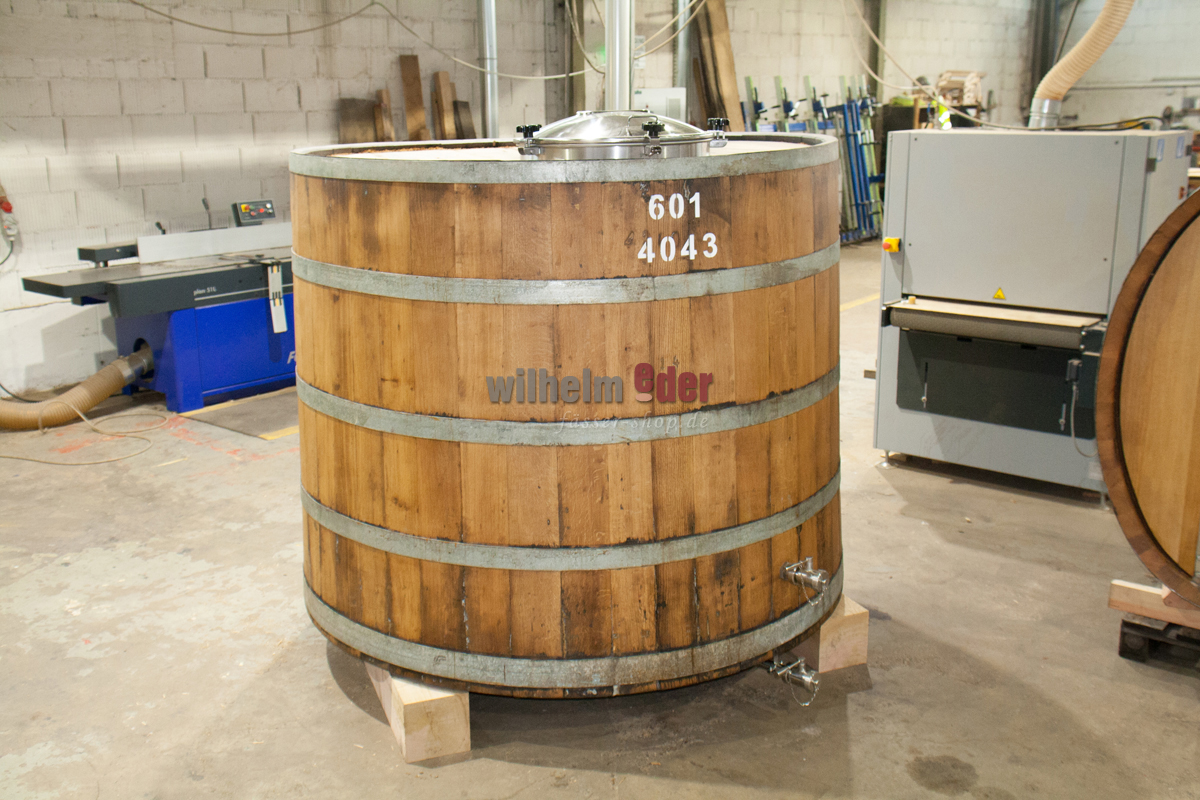
Cuve usagée d'un grand producteur allemand de liqueurs à base de plantes Révision et contrôle de notre tonnellerie.Chaque baignoire est une pièce unique !Cette cuve est équipée de :- Un couvercle en forme de dôme en acier inoxydable (diamètre 60 cm)- une vidange résiduelle (complète avec pièce de raccordement, tuyau, support de tuyau et robinet de vidange à bille)D'autres accessoires, tels que les vannes d'essai, les plaques de refroidissement, les poutres porteuses ou les portes en acier inoxydable, sont disponibles sous la rubrique accessoires

STR Cask - Shave, Toast, Re-charred. Un fût qui offre une combinaison de chêne vierge frais et de fût de vin rouge de premier remplissage. Comme dans les fûts de chêne neufs, le whisky mûrit plus rapidement que dans les fûts usagés. Il bénéficie encore des notes fruitées de vin rouge du pré-vieillissement. Le Dr Jim Swan, chimiste et biologiste de formation et expert passionné de whisky, a mis au point ce procédé spécial. ShaveLa première étape consiste à "raser" le tonneau. Tout d'abord, le tonneau est ouvert et la couche intérieure, fortement saturée de vin rouge, est raclée. Cela donne au fût une combinaison d'arômes légers de vin rouge et de chêne frais (Virgin Oak).ToastL'intérieur exposé du fût est à nouveau grillé en brûlant des copeaux de chêne provenant de vieux fûts de whisky. Le sucre et la vanilline du chêne se caramélisent et les notes épicées et sucrées correspondantes sont mises en avant. Re-charrEnfin, les fûts sont brûlés une fois de plus pour libérer le plus d'arômes possible et, en même temps, pour éliminer les porteurs d'arômes indésirables tels que les tanins acides et les composés chimiques comme la lignine, la cellulose ou l'hémicellulose. Les fûts sont équipés en standard d'une bonde en bois ou en plastique usagée. Si vous souhaitez un nouveau bouchon en silicone, vous pouvez le commander sous accessoires (type Standard - C16). Fûts en bois ayant contenu du liquide : Des encoches dans le bois, fissures extérieures dues aux contraintes ou éventuellement un fond irrégulier ne sont pas un défaut de qualité mais plutôt des caractéristiques de bois qui viennent des particularités de la construction et l’usage antérieur des fûts. Ceci ne réduit pas la fonctionnalité du fût. Nous contrôlons soigneusement les fûts lors de contrôle de sortie pour détecter les défauts sensoriels et techniques. Nous n'assumons aucune responsabilité pour les fissures qui se produisent pendant la maturation. Une réparation possible et significative n'est pas un service de garantie.Toutes les photos sont des photos d’exemple, des différences des produits sont possibles.

Fût à bourbon, vidé récemment, env. 190 l, en provenance de Old Forester.Fûts en chêne blanc d'Amérique, parfaits pour le stockage de whisky, de vodka, d'eau-de-vie, de genièvre, d'eau-de-vie de bière, etc. Les fûts sont équipés en standard d'une bonde en bois ou en plastique usagée. Si vous souhaitez un nouveau bouchon en silicone, vous pouvez le commander sous accessoires (type Standard - C16). Fûts en bois ayant contenu du liquide : Des encoches dans le bois, fissures extérieures dues aux contraintes ou éventuellement un fond irrégulier ne sont pas un défaut de qualité mais plutôt des caractéristiques de bois qui viennent des particularités de la construction et l’usage antérieur des fûts. Ceci ne réduit pas la fonctionnalité du fût. Nous contrôlons soigneusement les fûts lors de contrôle de sortie pour détecter les défauts sensoriels et techniques. Nous n'assumons aucune responsabilité pour les fissures qui se produisent pendant la maturation. Une réparation possible et significative n'est pas un service de garantie. Toutes les photos sont des photos d’exemple, des différences des produits sont possibles.

Tonneau à bourbon, vidé récemment, env. 190 l, en provenance de Old Forester. Le whisky Old Forester 1920 Prohibition Style porte parfaitement son nom. Pour en comprendre la signification, il faut revenir à l’année 1920 et au « Volstead Act de 1920 ». Pendant la Prohibition aux États-Unis, seules six distilleries du Kentucky étaient autorisées à continuer à distiller du bourbon à des fins médicales, dont Old Forester. Il s’agit également du seul bourbon commercialisé par la même entreprise avant, pendant et après la Prohibition. Particularité : durant la Prohibition, le whisky ne pouvait être embouteillé qu’à 100 proof (50 % vol.). Comme le whisky est entré en fût à 100 proof, il a atteint une teneur de 115 proof (57,5 % vol.) après la part des anges. En hommage à cette époque, Old Forester a lancé le 1920 Prohibition Style Bourbon à 115 proof. Profil gustatif : Cerises, caramel, chocolat noir et sirop d’érable Notes maltées, noisette, nougat Finale longue avec noix de coco toastée, chocolat noir et guimauves grillées Les fûts sont équipés en standard d'une bonde en bois ou en plastique usagée. Si vous souhaitez un nouveau bouchon en silicone, vous pouvez le commander sous accessoires (type Standard - C16). Fûts en bois ayant contenu du liquide : Des encoches dans le bois, fissures extérieures dues aux contraintes ou éventuellement un fond irrégulier ne sont pas un défaut de qualité mais plutôt des caractéristiques de bois qui viennent des particularités de la construction et l’usage antérieur des fûts. Ceci ne réduit pas la fonctionnalité du fût. Nous contrôlons soigneusement les fûts lors de contrôle de sortie pour détecter les défauts sensoriels et techniques. Nous n'assumons aucune responsabilité pour les fissures qui se produisent pendant la maturation. Une réparation possible et significative n'est pas un service de garantie. Toutes les photos sont des photos d’exemple, des différences des produits sont possibles.
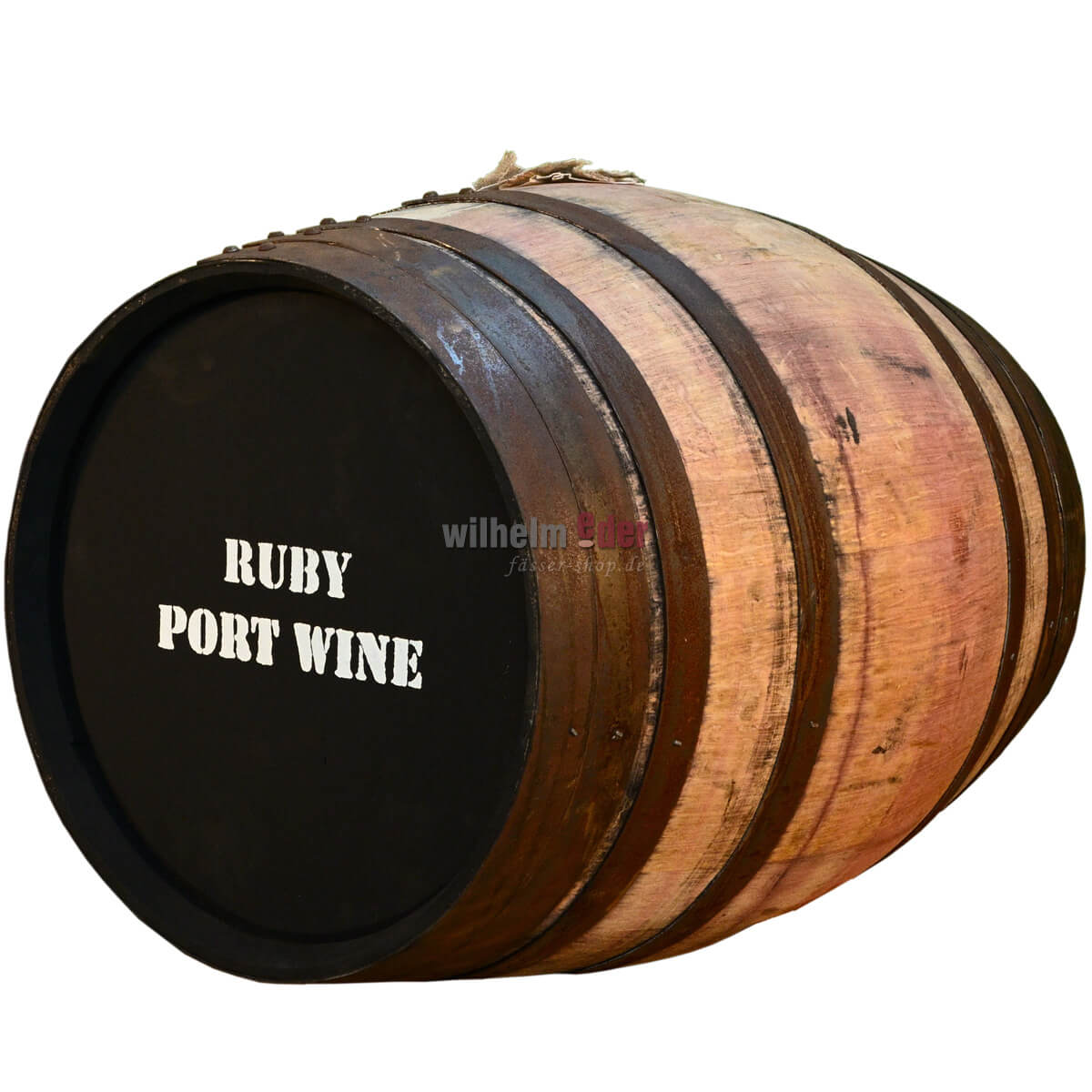
Des barils de vin de Porto Ruby fraîchement vidés.Le Porto Ruby est plus jeune, car il a mûri moins longtemps que le Porto Tawny.L'avantage de ces fûts est que l'on y retrouve les notes typiques du vin de Porto, mais dans une note fruitée et douce, moins lourde qu'un Tawny, donc peut-être plus moderne (par exemple pour la maturation du gin ou des céréales).La livraison s'effectue sans stockage de fûts ou de supports. Les fûts sont équipés en standard d'une bonde en bois ou en plastique usagée. Si vous souhaitez un nouveau bouchon en silicone, vous pouvez le commander sous accessoires (type Standard - C15). Veuillez faire attention! Les nombres de litres indigués sont nominales. Pendant la verification differences sont possible! Fûts en bois ayant contenu du liquide : Des encoches dans le bois, fissures extérieures dues aux contraintes ou éventuellement un fond irrégulier ne sont pas un défaut de qualité mais plutôt des caractéristiques de bois qui viennent des particularités de la construction et l’usage antérieur des fûts. Ceci ne réduit pas la fonctionnalité du fût. Nous contrôlons soigneusement les fûts lors de contrôle de sortie pour détecter les défauts sensoriels et techniques. Nous n'assumons aucune responsabilité pour les fissures qui se produisent pendant la maturation. Une réparation possible et significative n'est pas un service de garantie. Toutes les photos sont des photos d’exemple, des différences des produits sont possibles.

Des barils de vin de Porto Ruby fraîchement vidés. Le Porto Ruby est plus jeune, car il a mûri moins longtemps que le Porto Tawny. L'avantage de ces fûts est que l'on y retrouve les notes typiques du vin de Porto, mais dans une note fruitée et douce, moins lourde qu'un Tawny, donc peut-être plus moderne (par exemple pour la maturation du gin ou des céréales). Les fûts sont équipés en standard d'une bonde en bois ou en plastique usagée. Si vous souhaitez un nouveau bouchon en silicone, vous pouvez le commander sous accessoires (type Standard - C16). Fûts en bois ayant contenu du liquide : Des encoches dans le bois, fissures extérieures dues aux contraintes ou éventuellement un fond irrégulier ne sont pas un défaut de qualité mais plutôt des caractéristiques de bois qui viennent des particularités de la construction et l’usage antérieur des fûts. Ceci ne réduit pas la fonctionnalité du fût. Nous contrôlons soigneusement les fûts lors de contrôle de sortie pour détecter les défauts sensoriels et techniques. Nous n'assumons aucune responsabilité pour les fissures qui se produisent pendant la maturation. Une réparation possible et significative n'est pas un service de garantie. Toutes les photos sont des photos d’exemple, des différences des produits sont possibles.
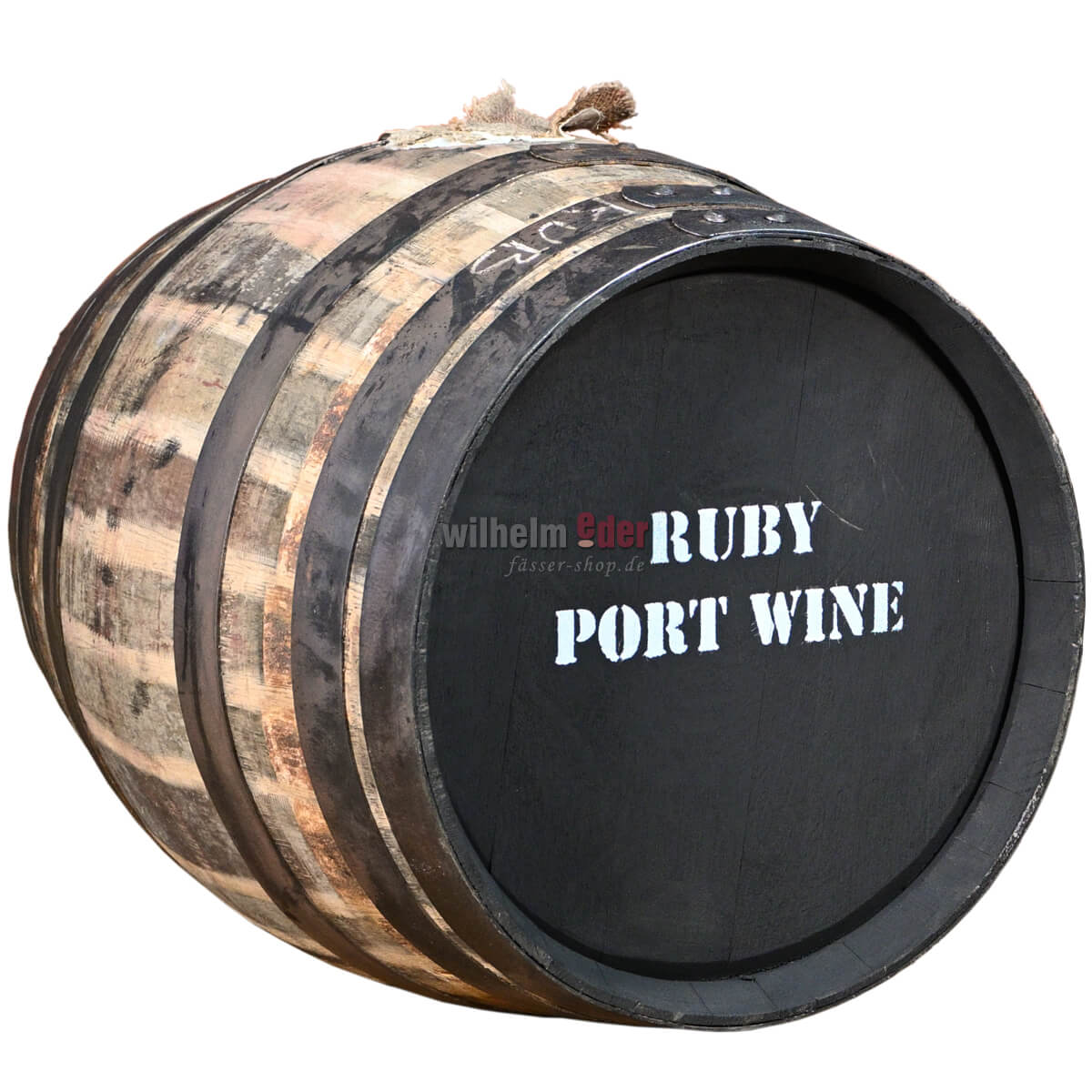
Fûts de vin de Porto Ruby fraîchement vidés. Le Porto Ruby est plus jeune, car il a mûri moins longtemps que le Porto Tawny.L'avantage de ces fûts est que l'on y retrouve les notes typiques du vin de Porto, mais dans une note fruitée et douce, moins lourde qu'un Tawny, donc peut-être plus moderne (par exemple pour la maturation du gin ou des céréales). La livraison s'effectue sans stockage de fûts ou de supports. Les fûts sont équipés en standard d'une bonde en bois ou en plastique usagée. Si vous souhaitez un nouveau bouchon en silicone, vous pouvez le commander sous accessoires (type Standard - C15). Fûts en bois ayant contenu du liquide : Des encoches dans le bois, fissures extérieures dues aux contraintes ou éventuellement un fond irrégulier ne sont pas un défaut de qualité mais plutôt des caractéristiques de bois qui viennent des particularités de la construction et l’usage antérieur des fûts. Ceci ne réduit pas la fonctionnalité du fût.Nous contrôlons soigneusement les fûts lors de contrôle de sortie pour détecter les défauts sensoriels et techniques.Nous n'assumons aucune responsabilité pour les fissures qui se produisent pendant la maturation. Une réparation possible et significative n'est pas un service de garantie.
