
In the following article, only woods that are cultivated and ultimately harvested in accordance with strict sustainability rules are described and showcased.
The main type of wood for barrel making is – and this is probably well known to the general public – oak. Various grades of the species are used in different ways. However, traditions from other countries, based on special distillates such as slivovic (mulberry (Morus), robinia or oak) or some wines (robinia), also arouse curiosity as to how types of wood other than oak affect the various products during maturation. The sweet chestnut already played a role in wine production in Roman times.
But now, one by one and variety by variety.
Let’s start our excursion with the supposedly well-known species: the oak, whose botanical name is “Quercus”. As described at the beginning, we distinguish between different varieties with different characteristics depending on the growing region:

American oak
American oak (Quercus Alba) differs from European oak in a number of respects. The most central point is the density of the wood. The American white oak has a greater ring density than the European sessile oak. This leads to a greater exchange of oxygen in the barrel, which increases the influence of the wood on the product. The majority of American white oak comes from the Midwest of the USA, Missouri and the Ozark Mountains. American oak is used to make bourbon barrels with a capacity of 190 liters, the so-called ASB (American Standard Barrel), as well as barrique barrels. The heat treatment of the barrel can be adjusted to produce a wide variety of aromas. Toasting is a thermal treatment of the wood that produces vanilla aromas, among other things. These vanilla aromas are much more pronounced in American oak than in its European sister. American white oak contains up to ten times more vanillin. By adapting the toasting, a wide variety of aromas such as dark chocolate, ripe fruit or sweet caramel can be produced.
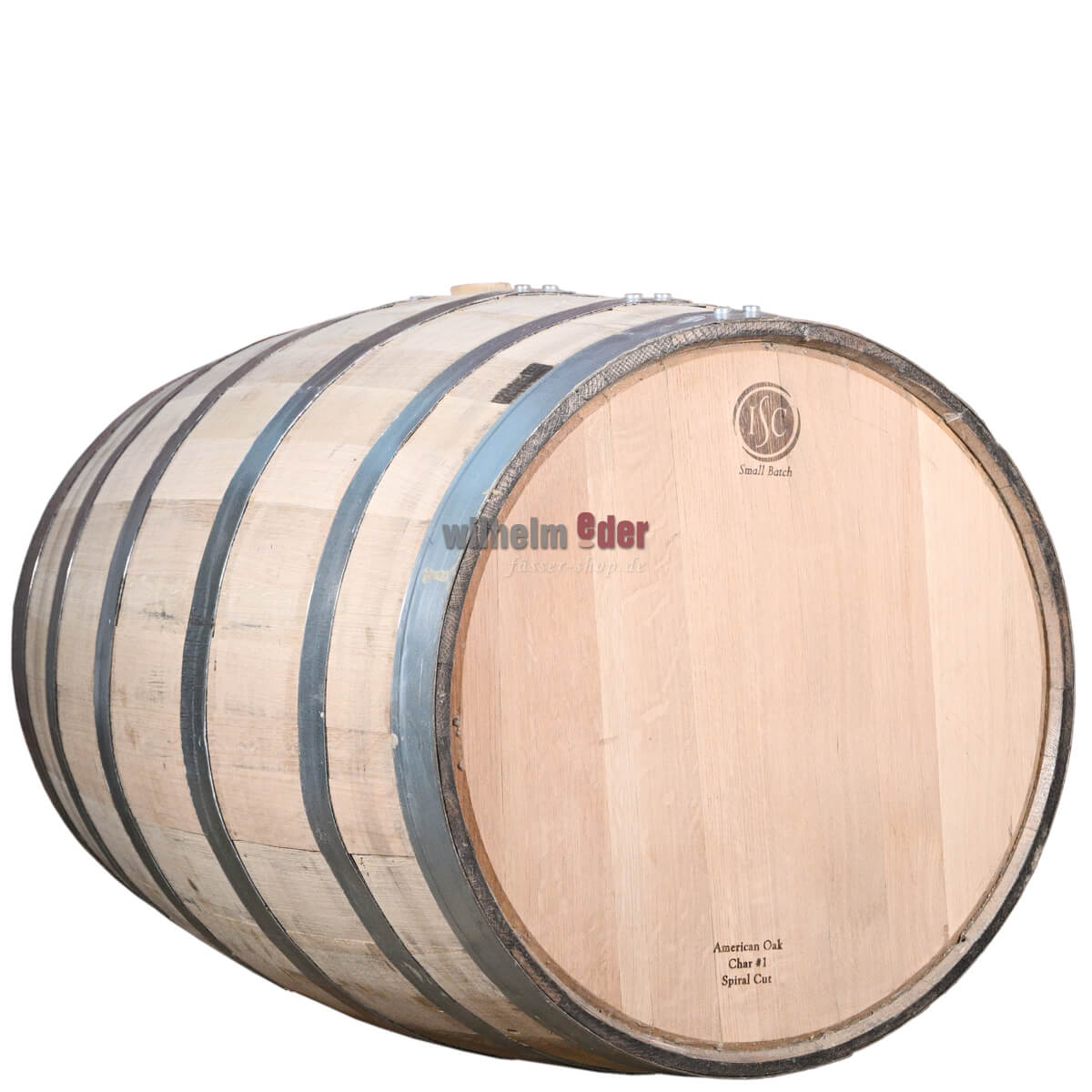
Ce type de fût est chauffé sur du bois de chêne en medium plus et puis une carbonisation léger Char #1 ou #4. La différence entre les différents niveaux de carbonisation est la pénétration à laquelle la carbonisation est brûlée dans le bois. Ces différentes pénétrations peuvent être obtenues en utilisant une Charring plus ou moins longue. La couche de carbone est la plus mince au niveau de la carotte 1 (carotte éclair) et la plus profonde au niveau de la carotte 4 (carotte d'alignement). Par les fraisages en spirale la surface à l’intérieur augmente et la maturation prend moins de temps. De plus les petits morceaux de bois fraisés sont restés à l’intérieur du fût pour rendre la surface encore plus grande et donner encore plus de goût au produit. Ceci est autorisé par la loi et n’est pas considéré comme aromatisation car les morceaux ont été une partie du fût. Fabricant: Independant Stave company (ISC)
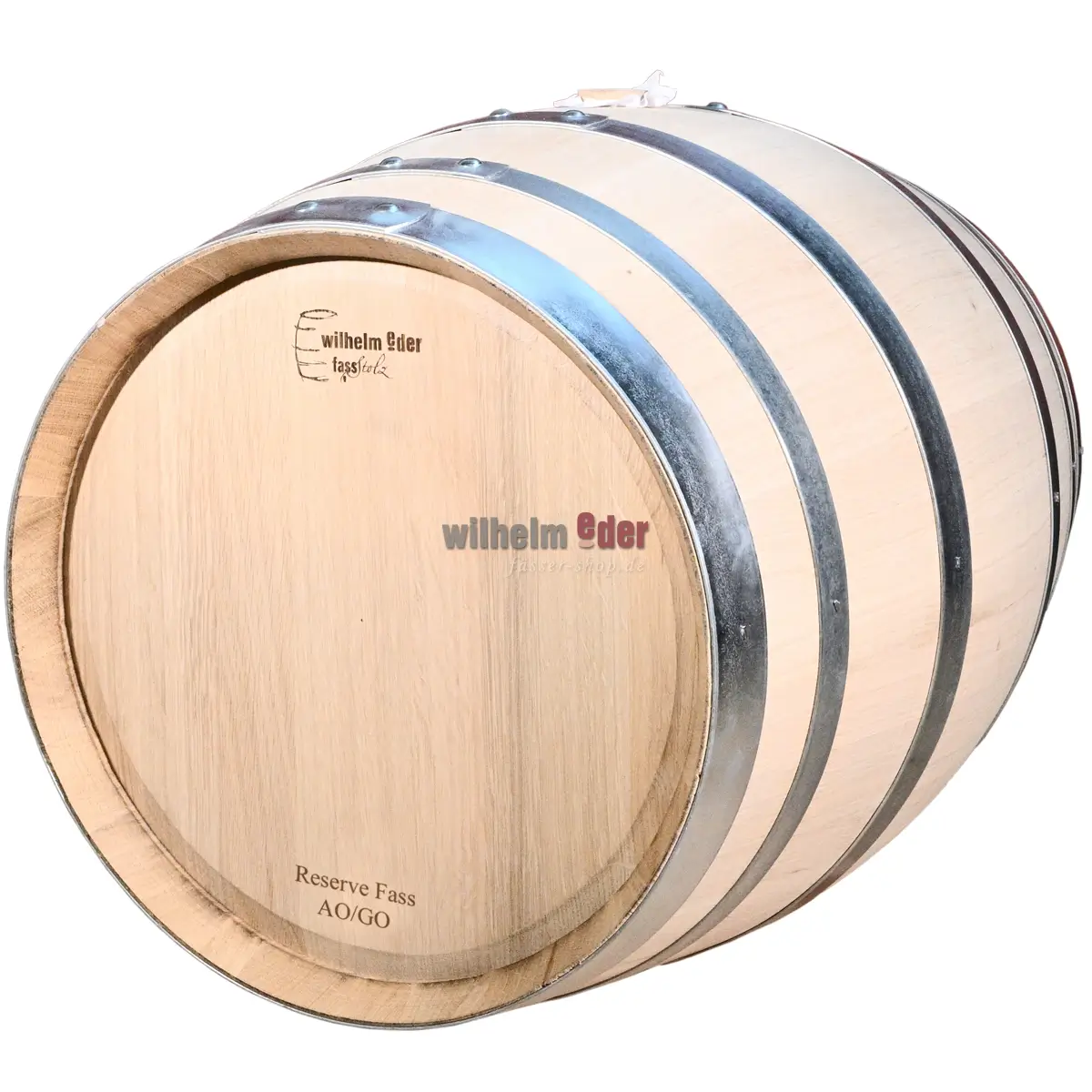
Un fût hybride fabriqué de bois de chêne américain et chêne allemand. Les douelles sont fabriquées de bois de chêne allemand et les têtes en bois de chêne américain. Le fût a été élaboré pour des utilisateurs qui souhaitent provoquer une influence de bois de chêne légChêne allemandère avec plus grande complexité après une longue maturation. Heavy toasting avec un char finish légerLe Reserve barrel reçoit un bousinage pendant 30 minutes sur un feu de bois de chêne. Ensuite il prend feu pour provoquer un char-level léger sur la surface. Avec ce bousinage, le distillat doit être plus longtemps dans le fût pour maximaliser le développement les arômes et la complexité. Bonde en silicone La livraison s'effectue sans stockage de fûts ou de supports. Prenez en considération, le content nomé pour de futs de bois ne correspond avec la capacité net. La capacité peut être plus ou moins de content indiqué. Le différend est pas raison pour réclamer.

Ces fûts ont été construits dans la forme caractéristique du cigare pour obtenir une maturation plus rapide et plus efficace. Les fûts sont disponibles en chêne allemand (apporte des épices et souligne le fruit) ou américain (apporte de la vanille et augmente la sensation en bouche). En raison de la conception allongée et du même volume, la surface intérieure est plus grande que celle d'un fût de 110 l de conception classique. Cette surface plus grande sert à la fois à la micro-oxygénation et à la libération des arômes du bois. Plusieurs tests et dégustations ont montré un résultat plus équilibré et plus harmonieux. En raison de leur conception, les têtes de fûts relativement petites sont, comme les douelles du fût, également munies d'un toast moyen (Structures tanniques fines, pain grillé, vanille, léger caramel) Le fût est équipé de série d'une bonde en silicone. Tous les toasts sont appliqués très lentement, cela se voit à l'uniformité à l'intérieur du fût et sans bulles de brûlure sur le bois de la douve ! Nos toasts agissent en profondeur. Prenez en considération, le content nomé pour de futs de bois ne correspond avec la capacité net. La capacité peut être plus ou moins de content indiqué.Le différend est pas raison pour réclamer.
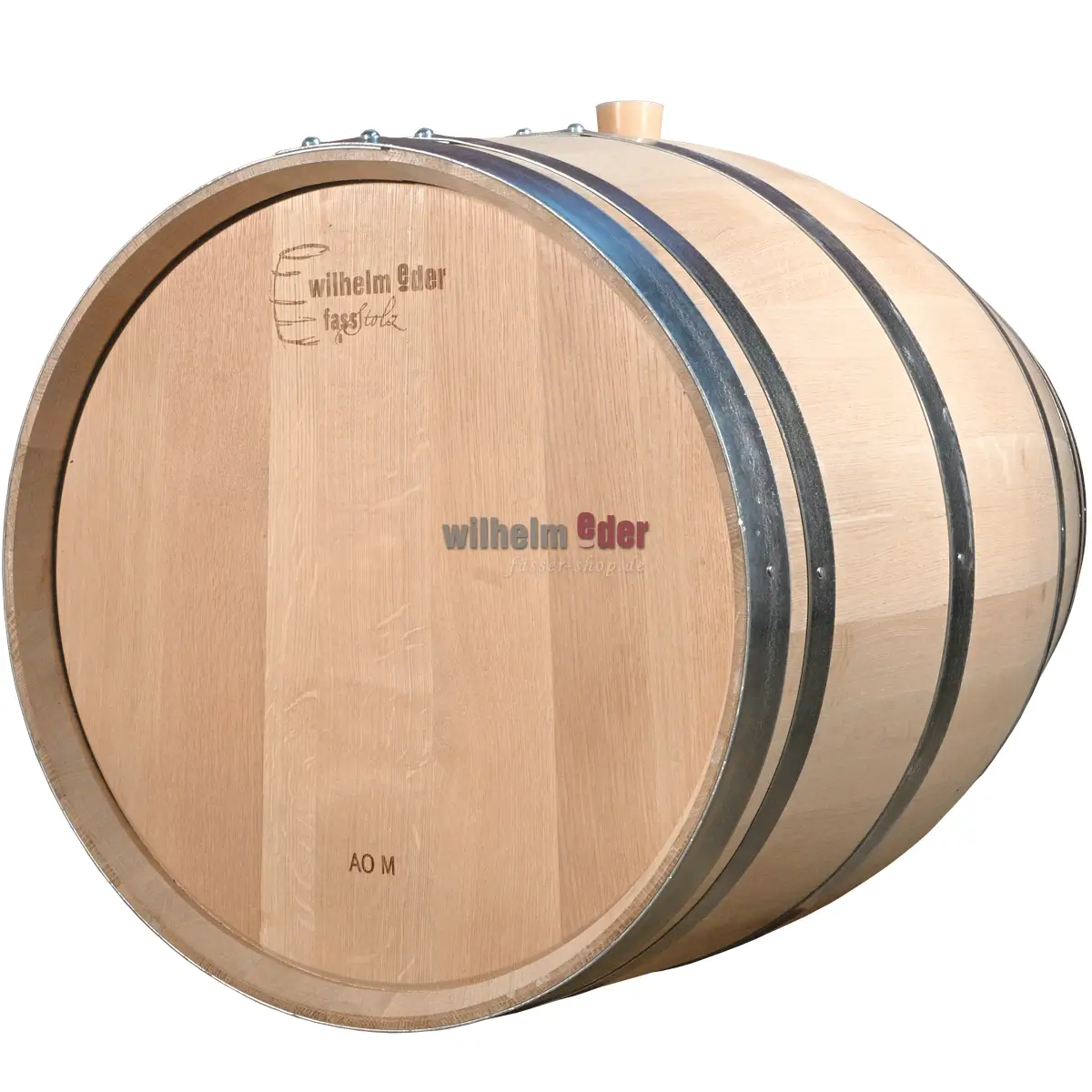
Ces fûts de chêne blanc américain de production allemande se révèlent particulièrement attrayants non seulement par leur sensualité douce et vanillée, mais aussi par leurs structures de coûts optimisées. Chauffe: MediumMedium PlusChar 3Medium Plus + Char 3 (Chauffe double) ForteFonds chauffées, livraison avec une bonde en silicone
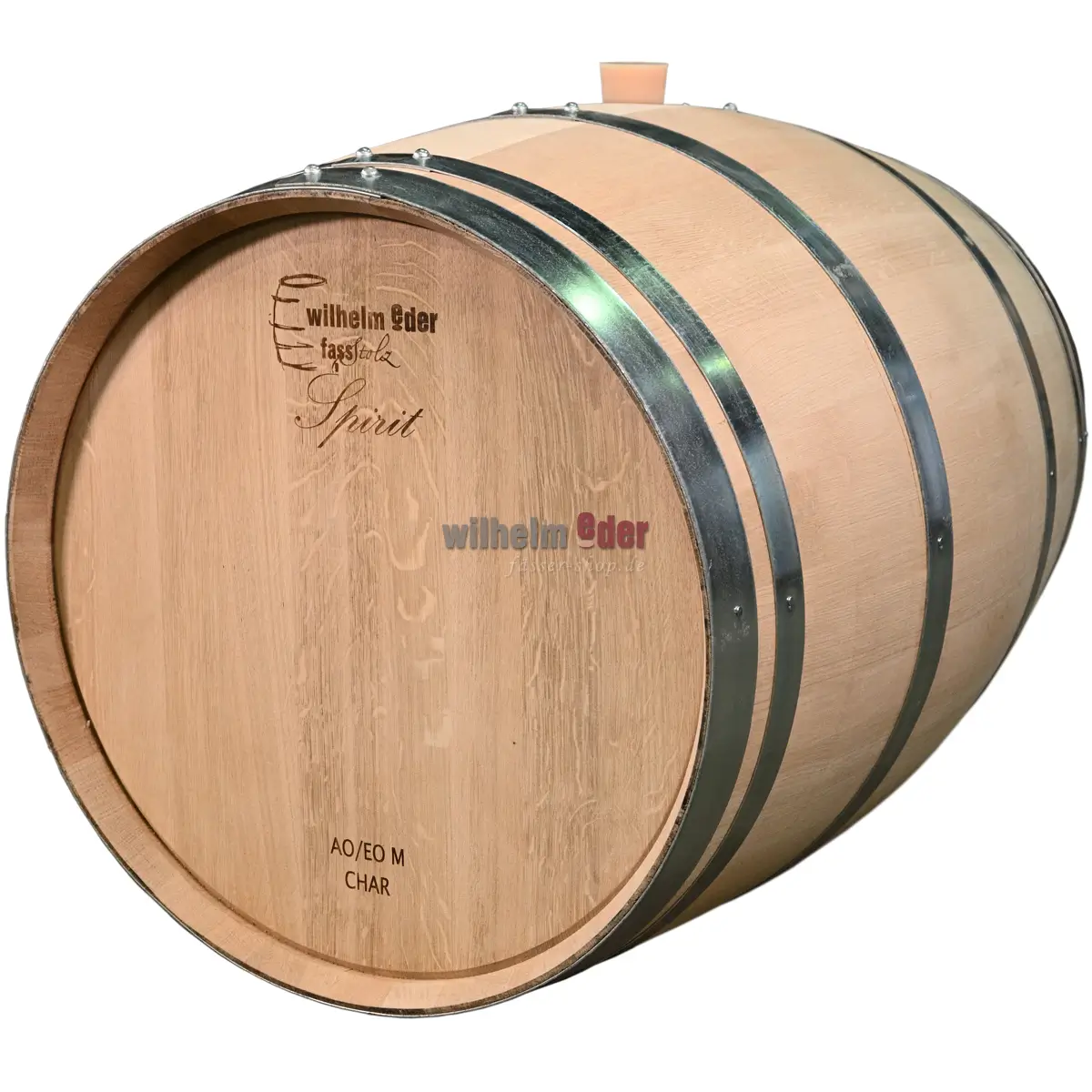
Les douves de cette barrique hybride ont été fabriquées en chêne d'amerique et les têtes en chêne d'europe. Cette barrique a été développée pour les utilisateurs dans le domaine des distillats qui souhaitent obtenir une influence plus douce du chêne, avec une plus grande complexité après une maturation plus longue.Char 1 ou Char 4 avec têtes en charLe tonneau de réserve est lentement grillé sur un feu de chêne pendant 30 minutes. Ensuite, il prend feu afin de provoquer un léger char-level à la surface. Avec ce type de toast, le distillat doit vieillir plus longtemps dans le fût afin de maximiser le développement des arômes et la complexité.Cercles galvanisés - têtes toastéesVeuillez noter que la taille nominale des fûts en bois ne correspond pas toujours à la contenance nette, qui peut être plus ou moins élevée. Les différences ne constituent pas un motif de réclamation.

Fûts à distillat de 100 l, en chêne blanc d'Amérique, intérieur chauffé/char extérieur brut, parfaits pour l'eau-de-vie de bière, le whisky, l'eau-de-vie de grains et les autres distillats nécessitant une fine note de vanille et des arômes de pain grillé durant la maturation en tête.Prenez en considération, le content nomé pour de futs de bois ne correspond avec la capacité net. La capacité peut être plus ou moins de content indiqué. Le différend est pas raison pour réclamer.Toasts disponibles :MediumMedium PlusChar 3La livraison s'effectue sans stockage de fûts ou de supports.Veuillez noter que le bois de chêne transmet ses arômes à la boisson stockée dans le fût après peu de temps déjà. Si vous ne souhaitez pas modifier le goût, nous vous recommandons d'utiliser des fûts décoratifs ou des fûts avec une vessie interne en acier inoxydable.
Fûts à distillat de 30 l à env. 50 l, en chêne blanc d'Amérique, intérieur chauffé/char extérieur brut, parfaits pour l'eau-de-vie de bière, le whisky, l'eau-de-vie de grains et les autres distillats nécessitant une fine note de vanille et des arômes de pain grillé durant la maturation en tête. Toast: Heavy Prenez en considération, le content nomé pour de futs de bois ne correspond avec la capacité net. La capacité peut être plus ou moins de content indiqué. Le différend est pas raison pour réclamer.La livraison s'effectue sans stockage de fûts ou de supports.Veuillez noter que le bois de chêne transmet ses arômes à la boisson stockée dans le fût après peu de temps déjà. Si vous ne souhaitez pas modifier le goût, nous vous recommandons d'utiliser des fûts décoratifs ou des fûts avec une vessie interne en acier inoxydable.
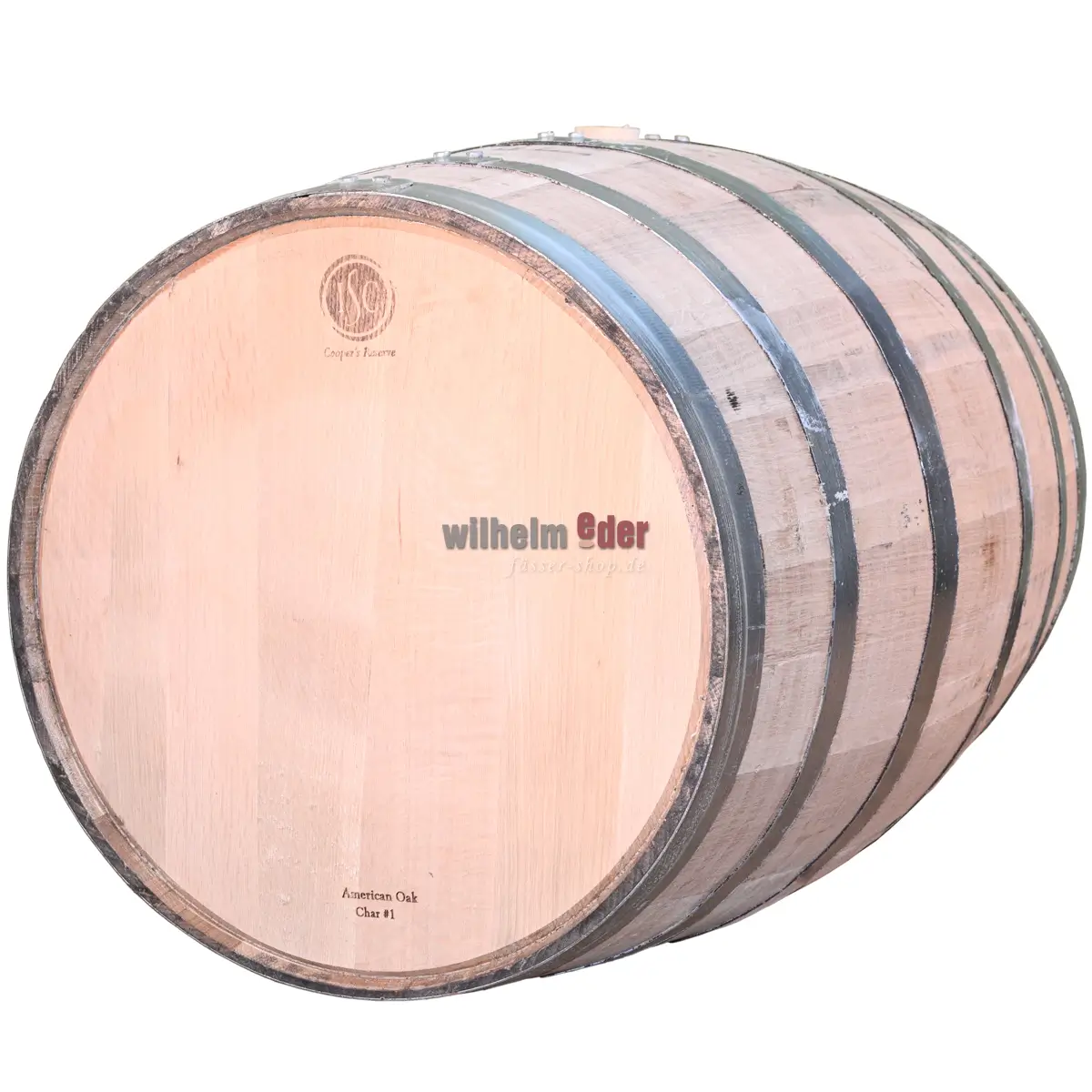
Tonneau de whisky original, produit de chêne américaine par Independant Stave Company (ISC - World Cooperage) aux Etats-Unis – abattu aux Ozarks / Missouri.Tonneau avec bonde de bois tendre pour être frappé. Ces tonneaux sont toastés avec le toast de gaz classique – le Charring. Tonneau de whisky original, produit de chêne américaine par World Cooperage aux Etats-Unis – abattu aux Ozarks / Missouri.Tonneau avec bonde de bois tendre pour être frappé. Ces tonneaux sont toastés avec le toast de gaz classique – le Charring. Au segment standard ces tonneaux sont équipés du Char 1, Char 3 – le "Alligator" Toast (Char 4) !En raison de la carbonisation et de la faible épaisseur de la douille (20 mm), votre distillat mûrit rapidement..Les arômes sont typiques pour le Bourbon tels que la vanille, le caractère de toast, les arômes de noisettes avec des arômes fumés et sucrés. La remise de la couleur est excellente résultant dans une couleur doré foncé. Bonde en bois Chauffe:- Char 1- Char 3- "Alligator" Toast (Char 4)
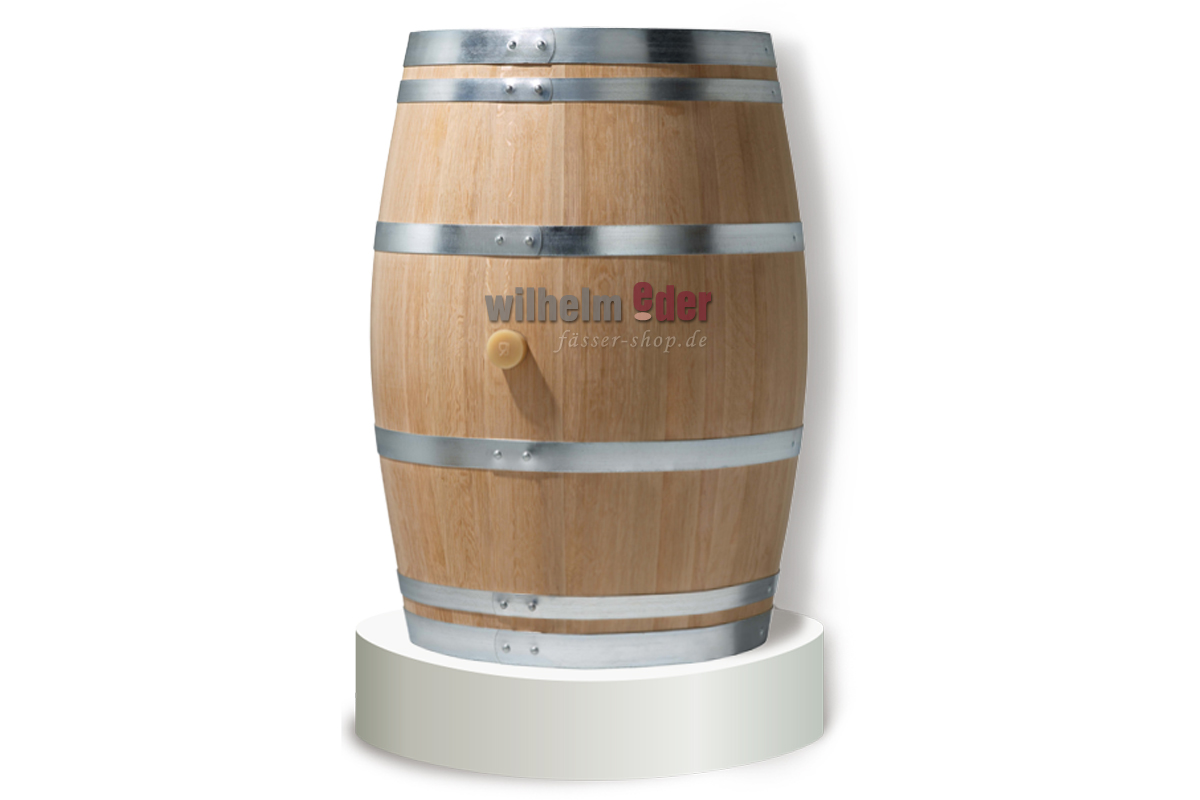
Douves de fûts stockées 24 moisPneus de fûts: 6 pneus galvanisés à chaudOrigine du bois: États-Unis (Arkansas, Kansas, Missouri, Oklahoma)Technique de toasting: traditionnelle avec fonds chaufféesArôme: riches arômes de chêne et de torréfaction, vanille, épices, sucre brunPalais: équilibre entre le fruit et les arômes de torréfaction, riche en structure et avec une finale fine.Parfaitement adapté à: des vins rouges et blancs corsés comme le cabernet sauvignon, le chardonnay, le merlot, la syrahNous recommandons un temps de maturation de: 12-18 mois Nous avons rassemblé pour vous une sélection de ces toasts avec une brève information pour chacun d'entre eux: Ces profils représentent une sélection de variantes de toastage très populaires en Europe. Beaucoup d'entre eux, utilisés seuls, sont trop exigeants pour un vin, c'est pourquoi il faut chercher et choisir la combinaison. L'application à d'autres types de vin est bien entendu également envisageable ! Pour d'autres profils de toastage, veuillez nous contacter ! Profil 11:Ce toasting est conçu pour des vins vraiment fins, il ajoute du corps et de la longueur tout en créant un bel équilibre entre le fruit et le bois. Ce toasting sur le fût américain classique apporte complexité et finesse ! À utiliser par exemple pour le merlot, le cabernet sauvignon, le sauvignon blanc et le chardonnay. Profil 33:Développé par un œnologue européen, conçu pour les vins rouges corsés moyens à très complexes. Ce toast est appliqué en un temps relativement court et à une température élevée. Il se caractérise par des arômes de vanille, de légers caractères grillés, et favorise les caractères légèrement boisés sur la langue. À utiliser par exemple avec le cabernet sauvignon et la syrah. Profil 37:Un toast qui est obtenu par une chaleur appliquée lentement et continuellement. Ce toast favorise les arômes de torréfaction, il apporte un mélange entre le pain grillé foncé, le toffee, et le sucre caramélisé. Ce toast doit donner au vin un goût typique de barrique. À utiliser par exemple avec le merlot, le cabernet sauvignon, le sauvignon blanc, le chardonnay. Profile 52:Un toasting développé pour réduire le caractère lactonique dans le chêne américain. En augmentant le temps et la température de toastage, la dégradation de la lignine est accrue et ce profil accentue les notes de vanille. Il s'agit d'un toasting qui accentue le caractère fruité et offre de légères notes de pain grillé foncé et des arômes de fumée. Profil 105:Correspond au toasting Medium Plus et en est une évolution, un peu plus rond en fin de bouche. Profil 107:Ce toast est à mi-chemin entre le Profile 52 et le Profile 33, il offre une vanilline douce et des arômes de torréfaction, il donne ses meilleurs résultats avec le Pinot Noir.A utiliser par ex. avec le Pinot Noir
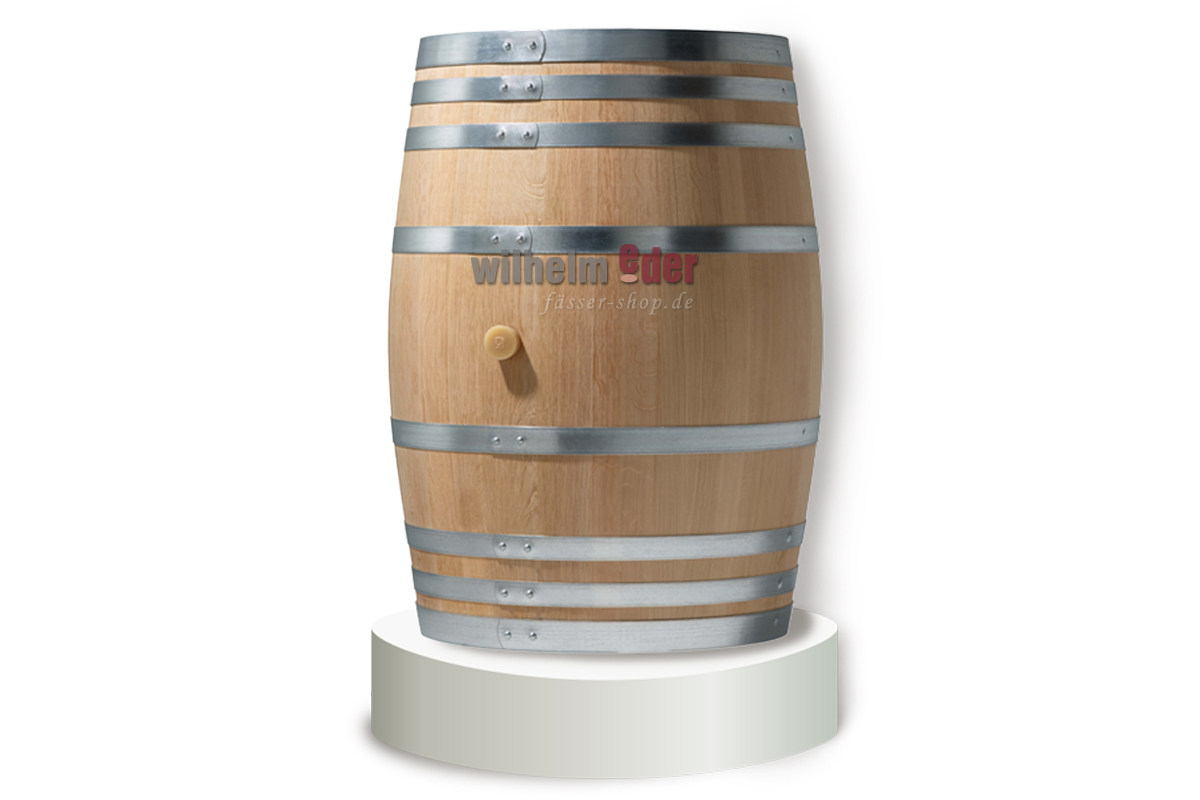
Type de construction: Export 300, 102 cm de longueur de douvesDouves de fûts stockées 24 moisCercles de tonneau: 8 cercles galvanisés à chaudOrigine du bois: États-Unis (Arkansas, Kansas, Missouri, Oklahoma)Technique de toasting: traditionnelle avec fonds chaufféesArôme: riches arômes de chêne et de torréfaction, vanille, épices, sucre brunPalais: équilibre entre le fruit et les arômes de torréfaction, riche en structure et avec une finale fine.Parfaitement adapté à: des vins rouges et blancs corsés comme le cabernet sauvignon, le chardonnay, le merlot, la syrahNous recommandons un temps de maturation de: 12-18 mois

Fabriqué à partir de bois de chêne séché, origine forêt palatine / Vosges du Nord !Grès rouge à grain fin d'environ 200 ans, taillé durablement. Ces fûts sont fabriqués dans notre propre tonnellerie à Bad Dürkheim et conviennent aussi bien aux petits lots de vin qu'aux distillats.Par défaut, ces fûts sont chaufées moyenne, mais nous pouvons également griller selon vos spécifications.Le fût est équipé de série d'une bonde en silicone. La livraison s'effectue sans stockage de fûts ou de chevalets. Tous les toasts sont appliqués très lentement, cela se voit à l'uniformité à l'intérieur du fût et sans bulles de brûlure sur le bois de la douve ! Nos toasts agissent en profondeur. Prenez en considération, le content nomé pour de futs de bois ne correspond avec la capacité net. La capacité peut être plus ou moins de content indiqué. Le différend est pas raison pour réclamer.
Un fût hybride fabriqué de bois de chêne américain et chêne allemand. Les douelles sont fabriquées de bois de chêne allemand et les têtes en bois de chêne américain. Le fût a été élaboré pour des utilisateurs qui souhaitent provoquer une influence de bois de chêne légChêne allemandère avec plus grande complexité après une longue maturation. Heavy toasting avec un char finish légerLe Reserve barrel reçoit un bousinage pendant 30 minutes sur un feu de bois de chêne. Ensuite il prend feu pour provoquer un char-level léger sur la surface. Avec ce bousinage, le distillat doit être plus longtemps dans le fût pour maximaliser le développement les arômes et la complexité. Bonde en silicone La livraison s'effectue sans stockage de fûts ou de supports. Prenez en considération, le content nomé pour de futs de bois ne correspond avec la capacité net. La capacité peut être plus ou moins de content indiqué. Le différend est pas raison pour réclamer.
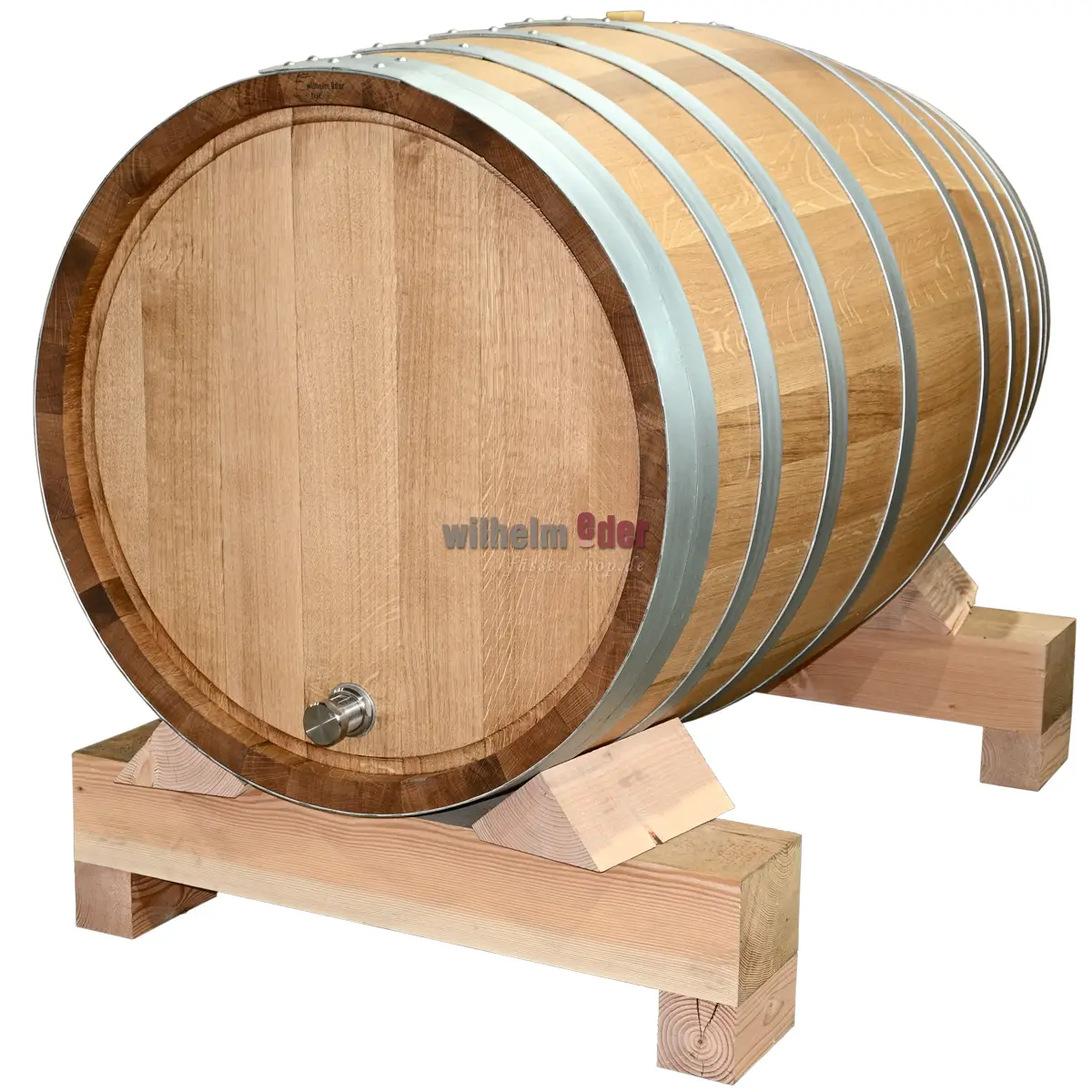
C'est surtout dans la région viticole de la Moselle que la tradition et la longue construction du Moselfuder, d'un volume d'environ 1000 l, sont cultivées et même récemment ravivées par la construction de nouveaux fûts. Fabriqués à partir de douelles de chêne à grain fin, séchées à l'air et taillées en miroir, nous construisons ces fûts traditionnels principalement pour le vieillissement et la maturation de vins blancs de haute qualité dans notre tonnellerie de Bad Dürkheim. Nous obtenons les troncs d'arbres pour la production de ces fûts de vin de haute qualité à partir de la sylviculture durable dans la forêt palatine et l'Eifel. Après le sciage des douelles, nous stockons le bois du tonneau pendant plusieurs années dans notre entreprise à l'extérieur pour un séchage naturel. Les fûts sont chauffés au feu de bois traditionnel de chêne et cuits à la vapeur à la demande du client.Délai de livraison après accord.

Le bois de chêne de nos fûts neufs provient presque exclusivement de la forêt du Palatinat, la plus grande zone forestière contiguë d'Allemagne. Cette chaîne de basse montagne est dominée par le grès comme sol et produit des bois de chênes très fins à croissance lente.Veuillez noter que les photos de l'article montrent des options supplémentaires qui sont soumises à un supplément.Les frais de livraison et de montage sont calculés individuellement. Délai de livraison selon accord.
Ces fûts ont été construits dans la forme caractéristique du cigare pour obtenir une maturation plus rapide et plus efficace. Les fûts sont disponibles en chêne allemand (apporte des épices et souligne le fruit) ou américain (apporte de la vanille et augmente la sensation en bouche). En raison de la conception allongée et du même volume, la surface intérieure est plus grande que celle d'un fût de 110 l de conception classique. Cette surface plus grande sert à la fois à la micro-oxygénation et à la libération des arômes du bois. Plusieurs tests et dégustations ont montré un résultat plus équilibré et plus harmonieux. En raison de leur conception, les têtes de fûts relativement petites sont, comme les douelles du fût, également munies d'un toast moyen (Structures tanniques fines, pain grillé, vanille, léger caramel) Le fût est équipé de série d'une bonde en silicone. Tous les toasts sont appliqués très lentement, cela se voit à l'uniformité à l'intérieur du fût et sans bulles de brûlure sur le bois de la douve ! Nos toasts agissent en profondeur. Prenez en considération, le content nomé pour de futs de bois ne correspond avec la capacité net. La capacité peut être plus ou moins de content indiqué.Le différend est pas raison pour réclamer.

Cette cuve de fermentation a été fabriquée et produite avec un couvercle en acier inoxydable et diverses options d'équipement en bois de chêne qui a été cultivé pendant de nombreuses années et scié dans notre scierie en coupe miroir. Le bois était ensuite stocké et séché à l'extérieur pendant plusieurs années. L'intérieur de la baignoire est légèrement chauffé, le fond supérieur est affleurant, ce qui évite les résidus d'eau lors du nettoyage ou du remplissage et est beaucoup plus hygiénique que la construction habituelle. La baignoire est équipée de cerclage en acier galvanisé à chaud. La finition a été réalisée avec un vernis transparent résistant aux aliments et à l'alcool. L'article n'inclut pas les accessoires ou les équipements en acier inoxydable. Ceux-ci peuvent être commandés sous la rubrique accessoires, sous l'article. Cercles : galvanisés à chaud Finition : Laquage avec une laque transparente Toast : selon les exigences du client L'échantillon d'image est équipé de (non inclus dans le prix) :- Valve d'échantillonnage- Procédure restante- Raccord à vis pour les déchets résiduels- Robinet à boisseau sphérique- Raccord à vis de Bütten avec robinet à boisseau sphérique Délai de livraison selon accord.
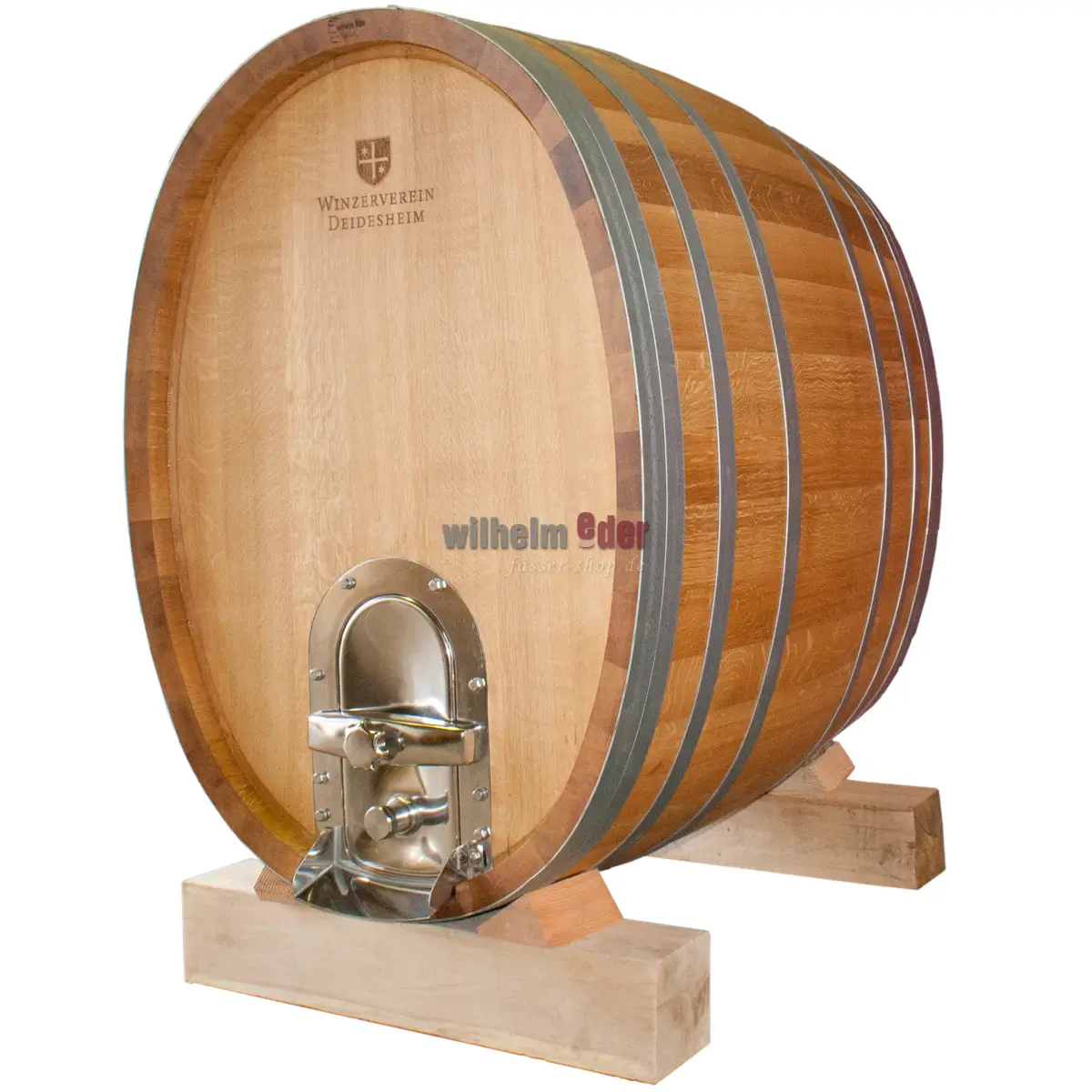
Fûts de stockage ovales en bois de 1300 l. Fabriqué à partir de bois de chêne séché, origine forêt palatine / Vosges du Nord.Grès rouge à grain fin d'environ 200 ans, taillé durablement selon la certification Naturland.Zone de production : forêt palatineCercles galvanisés à chaudToast : selon les exigences du client Tous les fûts sont équipés d'une pièce centrale au sol pour l'installation éventuelle d'une porte et d'une douve centrale dans la zone du ventre pour l'installation éventuelle de drains résiduels. Avant la livraison, chaque baril est contrôlé pour vérifier son étanchéité. Des fluctuations de capacité et de dimensions sont possibles, le calcul final du baril est effectué par un compteur d'eau après livraison. Les fûts sont équipés en standard de cercles galvanisés à chaud et d'une porte en bois. Ils sont traités à l'huile de lin ou avec un vernis transparent, certifié alimentaire et respirant (à préciser dans la rubrique "commentaires" lors de la commande). Veuillez noter que les photos de l'article montrent des options supplémentaires qui sont soumises à un supplément.Option cercles en acier inoxydable : Largeur : 60 mm et 70 mm Supplément par conteneur ou baril et sur demande. Les frais de livraison et de montage sont calculés individuellement. Délai de livraison selon accord. Vous trouverez les accessoires appropriés ci-dessous. Vous n'avez pas trouvé la bonne taille de canon ? Demandez une offre personnelle sans engagement.

Fûts de stockage ovales en bois de 1300 l. Une vitre en plexiglas est intégrée à l'avant du fût. Lorsque nous avons décidé de rendre visible le contenu de votre fût, nous n'avons pas seulement pensé à la haute technologie, mais aussi à l'esthétique.D'un point de vue visuel et avec une finition artisanale parfaite, ce fût à la pièce avec un large capot central avant en plexi spécial permet de "voir" l'intérieur du fût.En option, ce fût peut être éclairé et utilisé sans restriction aussi bien dans le domaine du vin que des spiritueux.Un point fort également pour les visites guidées de votre cave par vos clients !Pour cet équipement, nous avons intégré une porte en acier inoxydable dans la vitre, et les chevilles en bois sont visibles. Elles font désormais partie intégrante du fond en verre au lieu de la pièce centrale en bois.Laissez-vous "fasciner" par ce maître d'œuvre pour votre cave.Les frais de livraison et de montage sont calculés individuellement. Délai de livraison selon accord. Vous trouverez les accessoires appropriés ci-dessous. Vous n'avez pas trouvé la bonne taille de canon ? Demandez une offre personnelle sans engagement.
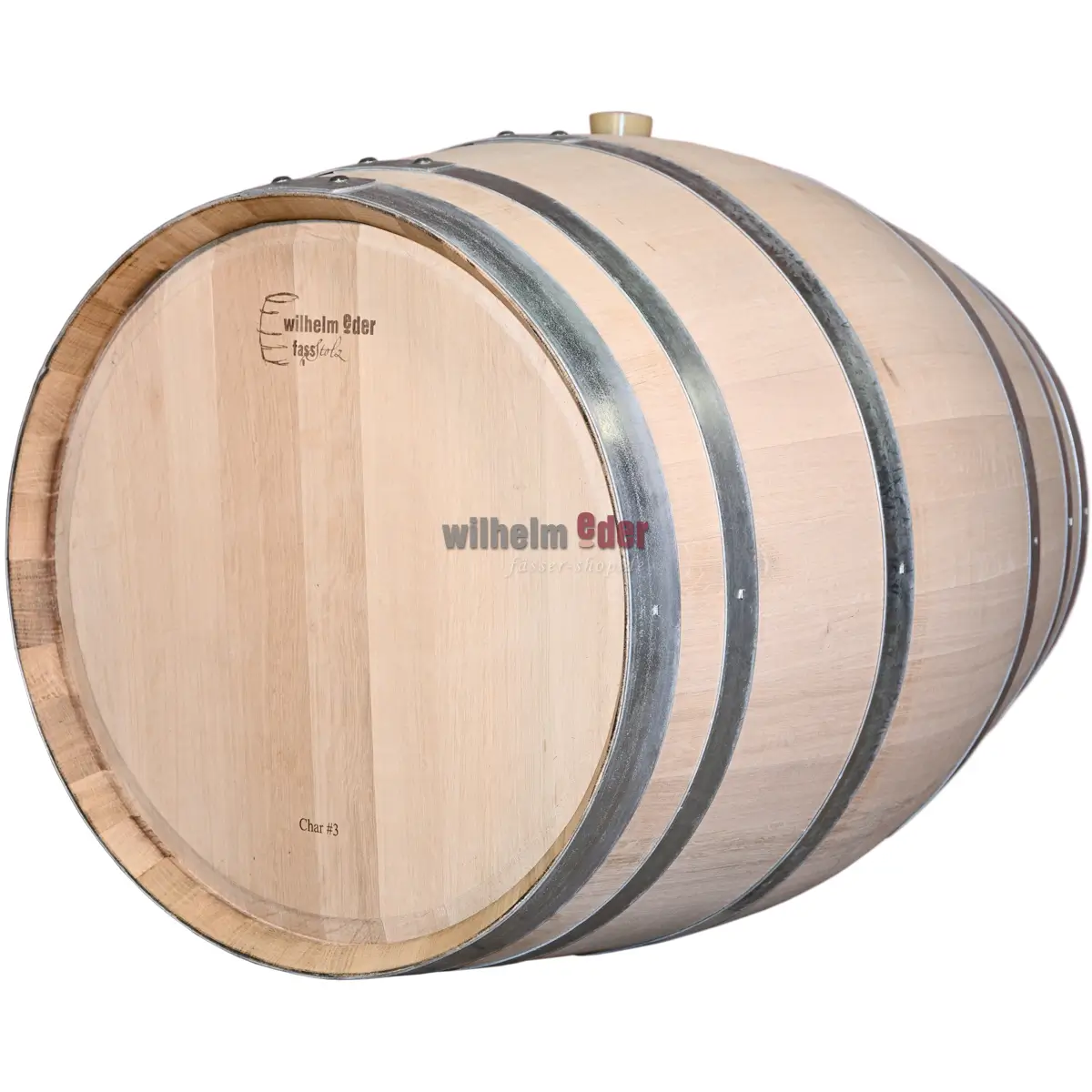
Un fût de 200 l de la série EDER - FassStolz® en chêne allemand (forêt du Palatinat), fabriqué dans la Tonnellerie Wilhelm Eder. Le chêne a poussé pendant environ 200 ans sur du grès bigarré et a été abattu de manière durable. L'innovation de la tonnellerie Wilhelm Eder - Un fût de 200 l en chêne du Palatinat. Avec ce fût, nous proposons une alternative élégante à l'American Standard Barrel (ASB), pour le vieillissement du whisky et d'autres distillats. Les avantages sont nombreux: Le bois de chêne provient de notre région, la forêt du Palatinat, ce qui implique pour nous de courtes distances de transport. Les douves sont sciées en miroir dans notre propre scierie. L'épaisseur des douelles de 27 mm a l'avantage de permettre un élevage élégant. De plus, le fût a une durée de vie aussi longue qu'un fût de barrique, ce qui est un atout en matière de durabilité. Ces fûts sont toastés avec la méthode classique de toastage au gaz - le charring. Dans le segment standard, ces fûts sont équipés du Char 3. Les arômes sont les notes typiques du bourbon, comme la vanille, le pain grillé, les notes de noix et les arômes de fumée douce. La couleur est magnifique et se termine par une teinte dorée Le fût est équipé de bondes en silicone et de cercles galvanisés à chaud.

Fabriqué à partir de bois de chêne séché, origine forêt palatine / Vosges du Nord.Grès rouge à grain fin d'environ 200 ans, taillé durablement.Tous les fûts sont équipés d'une douelle centrale dans la zone du ventre pour l'installation éventuelle de drains résiduels. Avant la livraison, chaque baril est contrôlé pour vérifier son étanchéité. Des fluctuations de capacité et de dimensions sont possibles, le calcul final du baril est effectué par un compteur d'eau après livraison. Les fûts sont équipés en standard de cercles galvanisés à chaud et d'une porte en bois. Ils sont traités à l'huile de lin ou avec un vernis transparent, certifié alimentaire et respirant (à préciser dans la rubrique "commentaires" lors de la commande). Veuillez noter que les photos de l'article montrent des options supplémentaires qui sont soumises à un supplément. Les frais de livraison et de montage sont calculés individuellement. Délai de livraison selon accord.
Palatinate oak
As already mentioned, European oak has finer pores than American oak. The denser pores of the wood result in less oxidation, which makes the wood aromas more subtle and subtle. This is why this wood is considered to be particularly fine. More precisely, the Palatinate oak is the sessile oak (Quercus sessilius). Palatinate oaks grow on sandstone soils in the local low mountain range, the Palatinate Forest, for around 200 years. Only particularly fine-pored and straight-grown trees are suitable for barrel making. They are carefully selected and then carefully felled. The trunk is cut in a mirror cut and the staves are left to dry for several years in the open air, where they are deliberately exposed to all weather conditions in order to maintain the characteristic tannin structures in the wood. The staves are then processed into barrels of various sizes. Barrels of 225 liters (barrique), 500 liters (tonneaux), 600 liters (half-barrel), 1000 liters (barrel) or 1200 liters (unit barrel) are particularly common for wine production. However, barrels are also made from Palatinate oak that are smaller or larger than these examples. Traditionally, the staves are pulled together over an oak fire by a cooper to form a barrel. The subsequent toasting – usually in light, medium, medium plus or forte – also takes place over the oak fire. Depending on the toasting, there are also different aromas of red fruits, caramel or roasted coffee. In general, however, the tannins are more prominent in this wood and the vanillin content plays a much smaller role.

Slavonian oak
Slavonian oak (Quercus peduncolator) is traditionally used for the construction of large barrels between 5 and 150 hl. In the Balkan region of Slavonia, the oaks literally grow in the swamp along rivers. Due to the high groundwater level in the growing areas, the water retains the tannins, which means that Slavonian oak has a more neutral taste. The wood tones can usually be found in the background during a tasting.
Mizunara oak
The Mizunara oak (Quercus Juniperus), or water oak, comes from Japan and does not have as long a tradition in barrel making as the French or American oak. This is due to the fact that barrel making has only been practiced in Japan for less than 100 years, whereas in Europe the craft of cooperage has existed for over 2000 years. The twisted growth and high water content of this oak make it very difficult to process. Only a residual moisture content of 14% is allowed for the wood to be processed into barrels. These complicating factors mean that a barrel made from Mizunara oak is around 10 times more expensive than a barrel of the same size made from American oak. Compared to the other oak species, water oak has the lowest tannin concentration. As a result, “overwooding” occurs less frequently, which makes Quercus Juniperus all the more interesting for distillates. The Mizunara oak is very intense, especially at the beginning. Finer, more delicate aromas only develop after longer storage. It has a unique sweet but also spicy flavor profile, which is due to the high lactone and vanilla content. Aromas such as spices, kara (a type of oriental incense), sandalwood, coconut and vanilla come from barrels made from this special wood. Mizunara casks are particularly popular with whisky distillers, as the whisky can benefit enormously from the long storage in the cask.
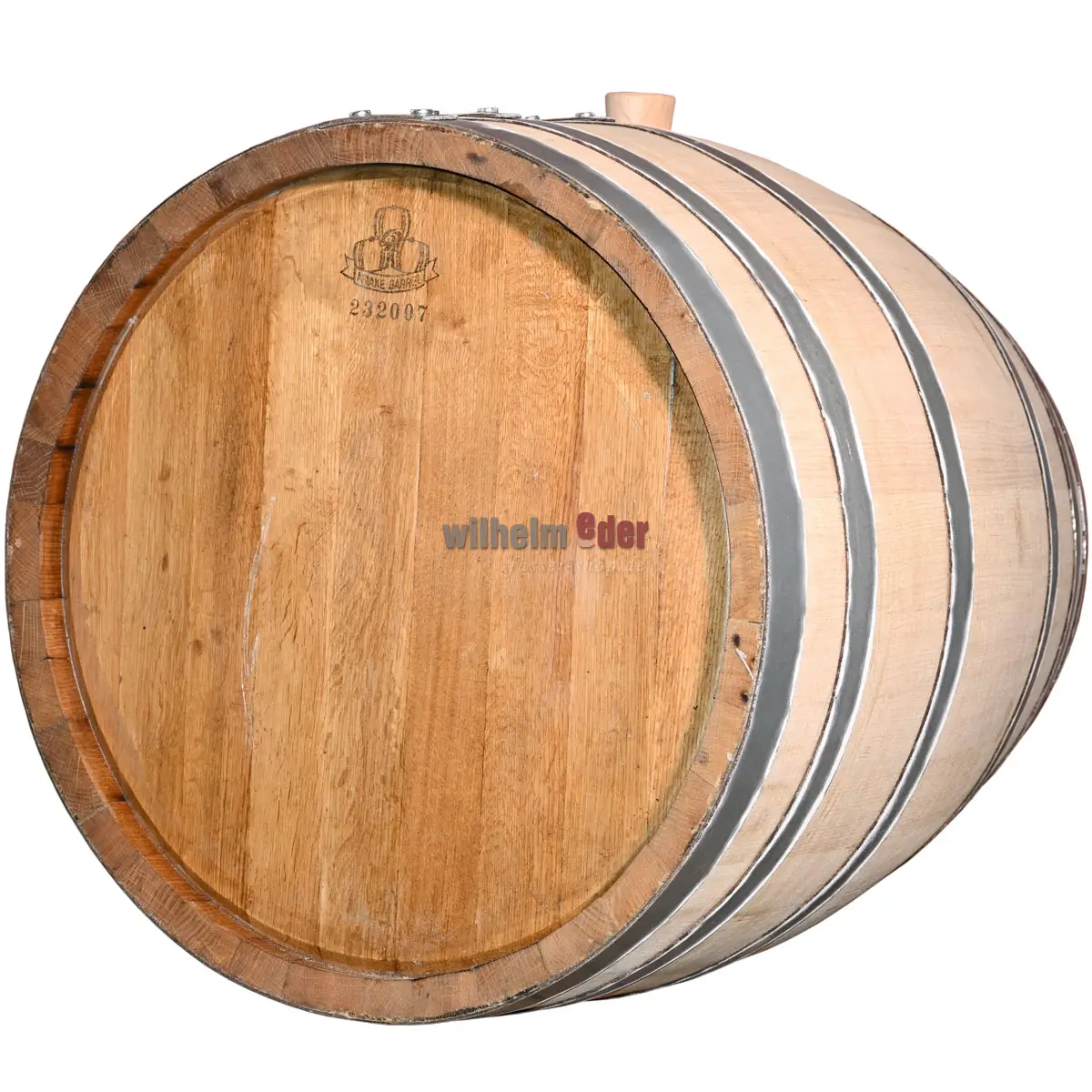
Ces fûts en chêne japonais sont adaptés à un stockage prolongé des distillats. Le chêne japonais, ou chêne de Mizunara (Quercus Crispula), présente certaines particularités par rapport à ses parents européens ou américains : Il pousse très rarement droit, mais il a presque toujours une torsion, ce qui rend très difficile pour le tonnelier de construire un tonneau à partir de ce bois. Les arômes que dégage ce bois sont très intenses, surtout au début. Les arômes fins ne se développent qu'après un stockage plus long. Mais il présente alors un profil de goût sucré et épicé unique, qui est dû au ratio de lactone et à la forte teneur en vanille du chêne. Les arômes qui proviennent du chêne de Mizunara sont le kara (une sorte d'encens oriental), le bois de santal et la noix de coco. Volume : 250 l Origine du bois : Japon Découvrez les particularités de ce bois de fût dans notre blog.

Les fûts de Maison Moussié allient authenticité et innovation avec la plus grande élégance. Ils sont conçus pour protéger l'identité du vin et permettre l'expression pure du fruit.Technologie de Toasting Innovante Les fûts sont toastés à l'aide d'une technologie brevetée impliquant des pierres chaudes. Ce processus sans combustion utilise des pierres naturelles et des éléments d'eau combinés à de la chaleur pour créer des fûts toastés de manière uniforme. Les conducteurs électriques transfèrent la chaleur directement aux pierres naturelles soigneusement sélectionnées. Cette énergie thermique est ensuite transférée des pierres aux douelles des fûts. De plus, la chaleur par convection génère de l'eau, qui est pulvérisée à intervalles spécifiques pendant le processus de toastage, se transformant en vapeur et en air chaud circulant pour augmenter la température entre la machine de toastage et les douelles.Jade Le jade naturel est une option qui confère des qualités supplémentaires élégantes au vin fini.Bois - Chêne Français Sélection Premium Forêts Françaises - 24 mois - grain très fin. Notre fût premium est fabriqué à partir de chêne à grain très fin (1,5 à 2 mm) provenant de forêts françaises sélectionnées pour leurs propriétés uniques. Le chêne est vieilli pendant 24 mois dans notre propre scierie.Toastings Disponibles:Harmony: Apporte structure, fraîcheur aromatique, pureté et longueur aux vins blancs et rouges légers.Volupté: Offre une complexité aromatique avec un grand respect pour le vin. Apporte du volume, de la rondeur et de la longueur. Convient aux vins blancs et aux vins rouges légers.Elegance: Améliore le volume et la longueur avec des notes grillées et épicées. Recommandé pour les cépages cultivés dans des régions au climat plus chaud.Complexité: Rehausse le fruit du vin tant au nez qu'en bouche. Idéal pour obtenir un résultat aromatique et structurel équilibré.Cercles: 6 cercles galvanisésBonde en silicone

Les fûts de Maison Moussié allient authenticité et innovation avec la plus grande élégance. Ils sont conçus pour protéger l'identité du vin et permettre l'expression pure du fruit.Technologie de Toasting Innovante Les fûts sont toastés à l'aide d'une technologie brevetée impliquant des pierres chaudes. Ce processus sans combustion utilise des pierres naturelles et des éléments d'eau combinés à de la chaleur pour créer des fûts toastés de manière uniforme. Les conducteurs électriques transfèrent la chaleur directement aux pierres naturelles soigneusement sélectionnées. Cette énergie thermique est ensuite transférée des pierres aux douelles des fûts. De plus, la chaleur par convection génère de l'eau, qui est pulvérisée à intervalles spécifiques pendant le processus de toastage, se transformant en vapeur et en air chaud circulant pour augmenter la température entre la machine de toastage et les douelles.Lave Les pierres de lave ont été sélectionnées pour leurs propriétés d'absorption et de transmission de la chaleur, ainsi que pour leur beauté et leur forme.Bois - Chêne Français Sélection Premium Forêts Françaises - 24 mois - grain très fin. Notre fût premium est fabriqué à partir de chêne à grain très fin (1,5 à 2 mm) provenant de forêts françaises sélectionnées pour leurs propriétés uniques. Le chêne est vieilli pendant 24 mois dans notre propre scierie.Toastings Disponibles:Harmony: Apporte structure, fraîcheur aromatique, pureté et longueur aux vins blancs et rouges légers.Volupté: Offre une complexité aromatique avec un grand respect pour le vin. Apporte du volume, de la rondeur et de la longueur. Convient aux vins blancs et aux vins rouges légers.Elegance: Améliore le volume et la longueur avec des notes grillées et épicées. Recommandé pour les cépages cultivés dans des régions au climat plus chaud.Complexité: Rehausse le fruit du vin tant au nez qu'en bouche. Idéal pour obtenir un résultat aromatique et structurel équilibré.Cercles: 6 cercles galvanisésBonde en silicone

Les fûts de Maison Moussié allient authenticité et innovation avec la plus grande élégance. Ils sont conçus pour protéger l'identité du vin et permettre l'expression pure du fruit.Technologie de Toasting Innovante Les fûts sont toastés à l'aide d'une technologie brevetée impliquant des pierres chaudes. Ce processus sans combustion utilise des pierres naturelles et des éléments d'eau combinés à de la chaleur pour créer des fûts toastés de manière uniforme. Les conducteurs électriques transfèrent la chaleur directement aux pierres naturelles soigneusement sélectionnées. Cette énergie thermique est ensuite transférée des pierres aux douelles des fûts. De plus, la chaleur par convection génère de l'eau, qui est pulvérisée à intervalles spécifiques pendant le processus de toastage, se transformant en vapeur et en air chaud circulant pour augmenter la température entre la machine de toastage et les douelles.Jade Le jade naturel est une option qui confère des qualités supplémentaires élégantes au vin fini.Bois - Chêne Français Sélection Premium Forêts Françaises - 24 mois - grain très fin. Notre fût premium est fabriqué à partir de chêne à grain très fin (1,5 à 2 mm) provenant de forêts françaises sélectionnées pour leurs propriétés uniques. Le chêne est vieilli pendant 24 mois dans notre propre scierie.Toastings Disponibles:Harmony: Apporte structure, fraîcheur aromatique, pureté et longueur aux vins blancs et rouges légers.Volupté: Offre une complexité aromatique avec un grand respect pour le vin. Apporte du volume, de la rondeur et de la longueur. Convient aux vins blancs et aux vins rouges légers.Elegance: Améliore le volume et la longueur avec des notes grillées et épicées. Recommandé pour les cépages cultivés dans des régions au climat plus chaud.Complexité: Rehausse le fruit du vin tant au nez qu'en bouche. Idéal pour obtenir un résultat aromatique et structurel équilibré.Cercles: 8 cercles galvanisésBonde en silicone

Les fûts de Maison Moussié allient authenticité et innovation avec la plus grande élégance. Ils sont conçus pour protéger l'identité du vin et permettre l'expression pure du fruit.Technologie de Toasting Innovante Les fûts sont toastés à l'aide d'une technologie brevetée impliquant des pierres chaudes. Ce processus sans combustion utilise des pierres naturelles et des éléments d'eau combinés à de la chaleur pour créer des fûts toastés de manière uniforme. Les conducteurs électriques transfèrent la chaleur directement aux pierres naturelles soigneusement sélectionnées. Cette énergie thermique est ensuite transférée des pierres aux douelles des fûts. De plus, la chaleur par convection génère de l'eau, qui est pulvérisée à intervalles spécifiques pendant le processus de toastage, se transformant en vapeur et en air chaud circulant pour augmenter la température entre la machine de toastage et les douelles.Lave Les pierres de lave ont été sélectionnées pour leurs propriétés d'absorption et de transmission de la chaleur, ainsi que pour leur beauté et leur forme.Bois - Chêne Français Sélection Premium Forêts Françaises - 24 mois - grain très fin. Notre fût premium est fabriqué à partir de chêne à grain très fin (1,5 à 2 mm) provenant de forêts françaises sélectionnées pour leurs propriétés uniques. Le chêne est vieilli pendant 24 mois dans notre propre scierie.Toastings Disponibles:Harmony: Apporte structure, fraîcheur aromatique, pureté et longueur aux vins blancs et rouges légers.Volupté: Offre une complexité aromatique avec un grand respect pour le vin. Apporte du volume, de la rondeur et de la longueur. Convient aux vins blancs et aux vins rouges légers.Elegance: Améliore le volume et la longueur avec des notes grillées et épicées. Recommandé pour les cépages cultivés dans des régions au climat plus chaud.Complexité: Rehausse le fruit du vin tant au nez qu'en bouche. Idéal pour obtenir un résultat aromatique et structurel équilibré.Cercles: 8 cercles galvanisésBonde en silicone

Les fûts de Maison Moussié allient authenticité et innovation avec la plus grande élégance. Ils sont conçus pour protéger l'identité du vin et permettre l'expression pure du fruit.Technologie de Toasting Innovante Les fûts sont toastés à l'aide d'une technologie brevetée impliquant des pierres chaudes. Ce processus sans combustion utilise des pierres naturelles et des éléments d'eau combinés à de la chaleur pour créer des fûts toastés de manière uniforme. Les conducteurs électriques transfèrent la chaleur directement aux pierres naturelles soigneusement sélectionnées. Cette énergie thermique est ensuite transférée des pierres aux douelles des fûts. De plus, la chaleur par convection génère de l'eau, qui est pulvérisée à intervalles spécifiques pendant le processus de toastage, se transformant en vapeur et en air chaud circulant pour augmenter la température entre la machine de toastage et les douelles.Jade Le jade naturel est une option qui confère des qualités supplémentaires élégantes au vin fini.Bois - Chêne Français Sélection Premium Forêts Françaises - 24 mois - grain très fin. Notre fût premium est fabriqué à partir de chêne à grain très fin (1,5 à 2 mm) provenant de forêts françaises sélectionnées pour leurs propriétés uniques. Le chêne est vieilli pendant 24 mois dans notre propre scierie.Toastings Disponibles:Harmony: Apporte structure, fraîcheur aromatique, pureté et longueur aux vins blancs et rouges légers.Volupté: Offre une complexité aromatique avec un grand respect pour le vin. Apporte du volume, de la rondeur et de la longueur. Convient aux vins blancs et aux vins rouges légers.Elegance: Améliore le volume et la longueur avec des notes grillées et épicées. Recommandé pour les cépages cultivés dans des régions au climat plus chaud.Complexité: Rehausse le fruit du vin tant au nez qu'en bouche. Idéal pour obtenir un résultat aromatique et structurel équilibré.Cercles: 8 cercles galvanisésBonde en silicone

Les fûts de Maison Moussié allient authenticité et innovation avec la plus grande élégance. Ils sont conçus pour protéger l'identité du vin et permettre l'expression pure du fruit.Technologie de Toasting Innovante Les fûts sont toastés à l'aide d'une technologie brevetée impliquant des pierres chaudes. Ce processus sans combustion utilise des pierres naturelles et des éléments d'eau combinés à de la chaleur pour créer des fûts toastés de manière uniforme. Les conducteurs électriques transfèrent la chaleur directement aux pierres naturelles soigneusement sélectionnées. Cette énergie thermique est ensuite transférée des pierres aux douelles des fûts. De plus, la chaleur par convection génère de l'eau, qui est pulvérisée à intervalles spécifiques pendant le processus de toastage, se transformant en vapeur et en air chaud circulant pour augmenter la température entre la machine de toastage et les douelles.Lave Les pierres de lave ont été sélectionnées pour leurs propriétés d'absorption et de transmission de la chaleur, ainsi que pour leur beauté et leur forme.Bois - Chêne Français Sélection Premium Forêts Françaises - 24 mois - grain très fin. Notre fût premium est fabriqué à partir de chêne à grain très fin (1,5 à 2 mm) provenant de forêts françaises sélectionnées pour leurs propriétés uniques. Le chêne est vieilli pendant 24 mois dans notre propre scierie.Toastings Disponibles:Harmony: Apporte structure, fraîcheur aromatique, pureté et longueur aux vins blancs et rouges légers.Volupté: Offre une complexité aromatique avec un grand respect pour le vin. Apporte du volume, de la rondeur et de la longueur. Convient aux vins blancs et aux vins rouges légers.Elegance: Améliore le volume et la longueur avec des notes grillées et épicées. Recommandé pour les cépages cultivés dans des régions au climat plus chaud.Complexité: Rehausse le fruit du vin tant au nez qu'en bouche. Idéal pour obtenir un résultat aromatique et structurel équilibré.Cercles: 8 cercles galvanisésBonde en silicone

Les fûts de Maison Moussié allient authenticité et innovation avec la plus grande élégance. Ils sont conçus pour protéger l'identité du vin et permettre l'expression pure du fruit.Technologie de Toasting Innovante Les fûts sont toastés à l'aide d'une technologie brevetée impliquant des pierres chaudes. Ce processus sans combustion utilise des pierres naturelles et des éléments d'eau combinés à de la chaleur pour créer des fûts toastés de manière uniforme. Les conducteurs électriques transfèrent la chaleur directement aux pierres naturelles soigneusement sélectionnées. Cette énergie thermique est ensuite transférée des pierres aux douelles des fûts. De plus, la chaleur par convection génère de l'eau, qui est pulvérisée à intervalles spécifiques pendant le processus de toastage, se transformant en vapeur et en air chaud circulant pour augmenter la température entre la machine de toastage et les douelles.Jade Le jade naturel est une option qui confère des qualités supplémentaires élégantes au vin fini.Bois - Chêne Français Sélection Premium Forêts Françaises - 24 mois - grain très fin. Notre fût premium est fabriqué à partir de chêne à grain très fin (1,5 à 2 mm) provenant de forêts françaises sélectionnées pour leurs propriétés uniques. Le chêne est vieilli pendant 24 mois dans notre propre scierie.Toastings Disponibles:Harmony: Apporte structure, fraîcheur aromatique, pureté et longueur aux vins blancs et rouges légers.Volupté: Offre une complexité aromatique avec un grand respect pour le vin. Apporte du volume, de la rondeur et de la longueur. Convient aux vins blancs et aux vins rouges légers.Elegance: Améliore le volume et la longueur avec des notes grillées et épicées. Recommandé pour les cépages cultivés dans des régions au climat plus chaud.Complexité: Rehausse le fruit du vin tant au nez qu'en bouche. Idéal pour obtenir un résultat aromatique et structurel équilibré.Cercles: 8 cercles galvanisésBonde en silicone
Les fûts de Maison Moussié allient authenticité et innovation avec la plus grande élégance. Ils sont conçus pour protéger l'identité du vin et permettre l'expression pure du fruit.Technologie de Toasting Innovante Les fûts sont toastés à l'aide d'une technologie brevetée impliquant des pierres chaudes. Ce processus sans combustion utilise des pierres naturelles et des éléments d'eau combinés à de la chaleur pour créer des fûts toastés de manière uniforme. Les conducteurs électriques transfèrent la chaleur directement aux pierres naturelles soigneusement sélectionnées. Cette énergie thermique est ensuite transférée des pierres aux douelles des fûts. De plus, la chaleur par convection génère de l'eau, qui est pulvérisée à intervalles spécifiques pendant le processus de toastage, se transformant en vapeur et en air chaud circulant pour augmenter la température entre la machine de toastage et les douelles.Lave Les pierres de lave ont été sélectionnées pour leurs propriétés d'absorption et de transmission de la chaleur, ainsi que pour leur beauté et leur forme.Bois - Chêne Français Sélection Premium Forêts Françaises - 24 mois - grain très fin. Notre fût premium est fabriqué à partir de chêne à grain très fin (1,5 à 2 mm) provenant de forêts françaises sélectionnées pour leurs propriétés uniques. Le chêne est vieilli pendant 24 mois dans notre propre scierie.Toastings Disponibles:Harmony: Apporte structure, fraîcheur aromatique, pureté et longueur aux vins blancs et rouges légers.Volupté: Offre une complexité aromatique avec un grand respect pour le vin. Apporte du volume, de la rondeur et de la longueur. Convient aux vins blancs et aux vins rouges légers.Elegance: Améliore le volume et la longueur avec des notes grillées et épicées. Recommandé pour les cépages cultivés dans des régions au climat plus chaud.Complexité: Rehausse le fruit du vin tant au nez qu'en bouche. Idéal pour obtenir un résultat aromatique et structurel équilibré.Cercles: 8 cercles galvanisésBonde en silicone
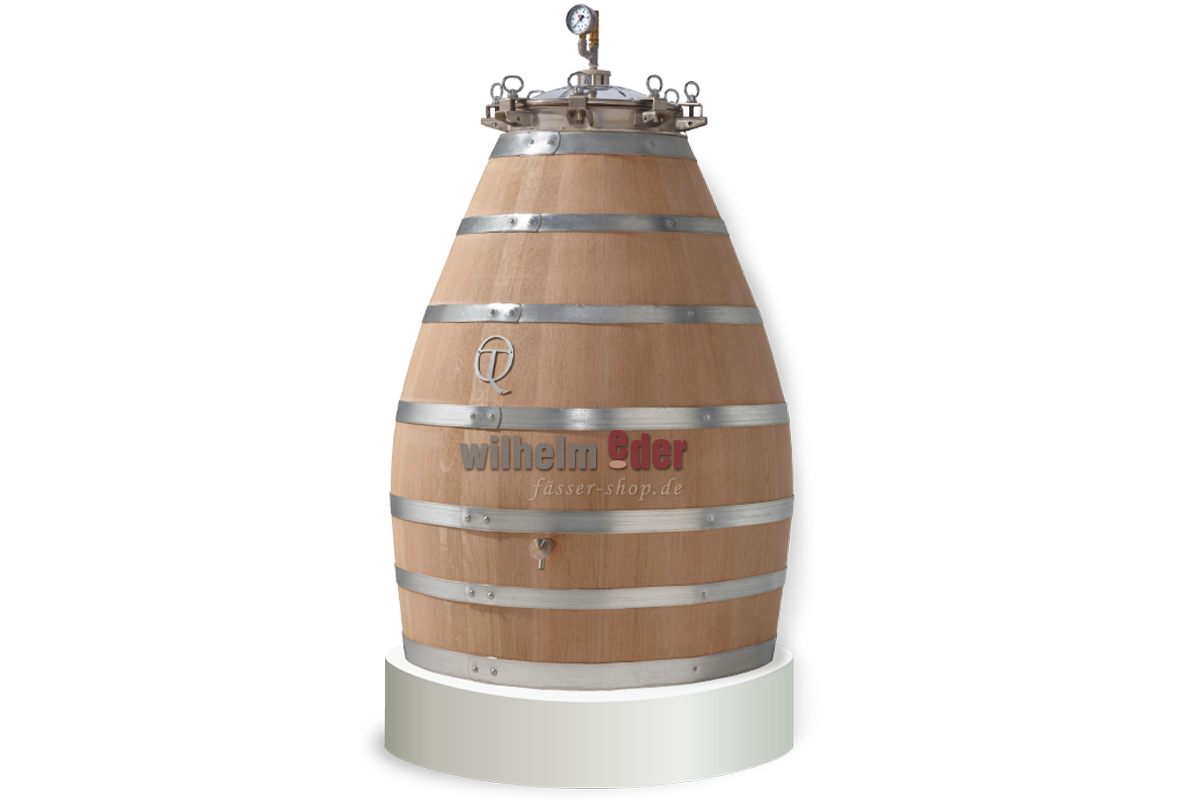
"La forme unique et les spécifications techniques de Perle sont nées d’une collaboration créative avec un Grand Cru Classé dans St. Emilion, où elle a été mise à l'essai pendant deux millésimes. Notre quête : développer une barrique inédite, intégrant un couvercle facilement amovible et une silhouette idéale pour la fermentation. Un couvercle facilement amovible et hermétique élimine toute intervention technique sur la barrique avant, pendant ou après la fermentation. La forme en goutte d'eau garantit que le marc se retrouve sur la partie haute, la plus conique et la plus étroite de la barrique. Lors des remontages, le moût en fermentation traverse un volume plus important de marc, ce qui favorise les échanges marc/jus. Bois : Chêne français Inclus :- Soupape de surpression- Robinet de dégustation- Couvercle en acier inoxydable Chauffe:Une préchauffe plus longue, assouplissant davantage les douelles, nous permet de créer la forme unique de cette barrique. Nos tonneliers procèdent ensuite à une chauffe spécifique ‘Perle’, conçue pour favoriser une intégration précoce avec le vin et un résultat sensoriel élégant."source: Tonnellerie Quintessence
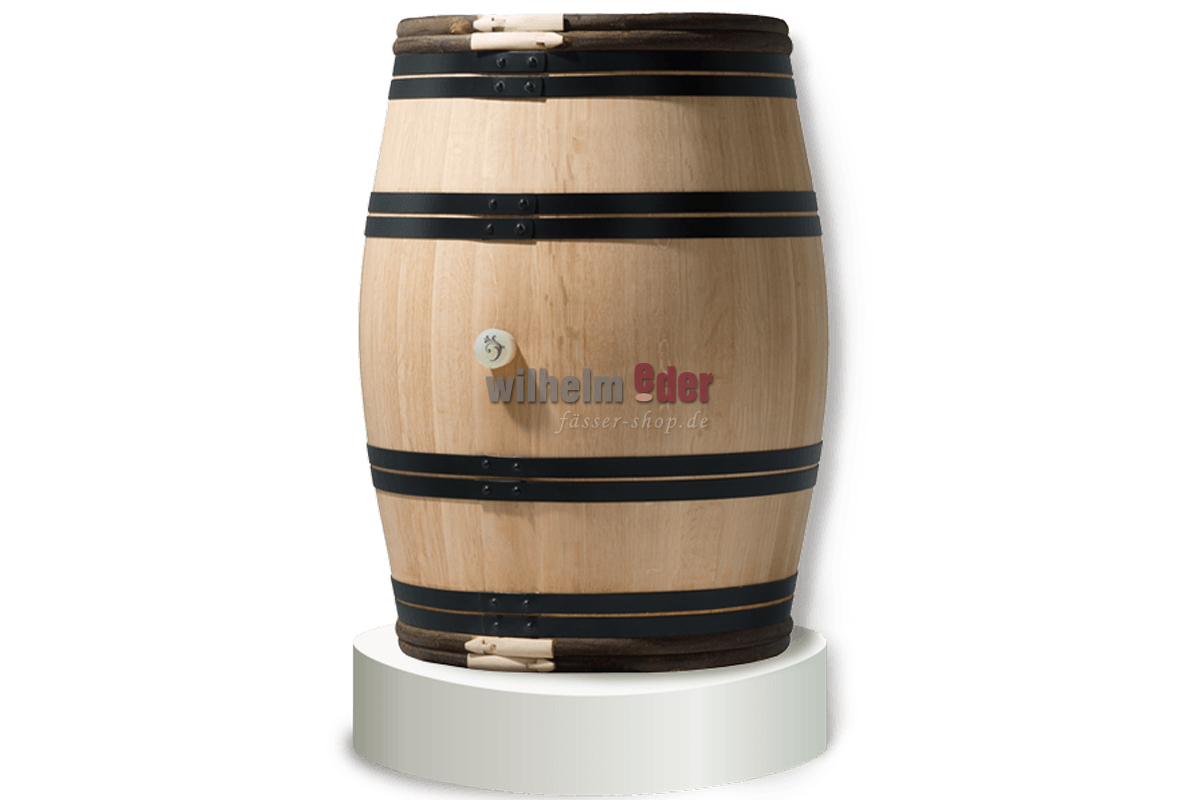
Le tonneau haut de gamme de la Tonnellerie Quintessence Avec ses 4 arceaux décoratifs en bois de châtaignier, le bois soigneusement sélectionné, la façade magnifiquement décorée et les 8 arceaux de barrique noirs, cette barrique est un véritable point d'orgue pour votre cave à vin.
Limousin oak
The classic among oaks! The Limousin oak grows in large forests in central France around the city of Limoges. It is one of the most popular woods for making barrels. The rather large-pored and tannin-rich wood gives the product an expressive color and a pronounced tannin structure. In addition to wine barrels, Limousin oak is also used to make distillate barrels, for example for maturing cognac or eau de vie. French cooperages process the wood in a similar way to German cooperages. The sizes are also similar to those of barrels made from German oak. Barrique (225 l) or tonneaux (500 l) sizes are particularly common in France. French oak also has many sensory similarities to Palatinate oak. The different toastings also allow different aromas to be produced. For example, a distillate that has matured in a wooden barrel with medium toasting can have aromas of dark fruit, toasted bread and coffee. The aromas always depend on the thermal treatment of the wood, the type of distillate and the duration of storage.

Let us now turn to the special types of wood that are often used for barrels in viticulture, but also for spirits and beers. The following woods, which are mainly found in Central European forests, show – each on its own, but also in combination – an incomparable characteristic.

Fûts en bois de mûrier, intérieur légèrement toasté, extérieur brut, avec cerclage galvanisé Le bois de mûrier est parfaitement adapté à l'élevage des distillats de prunes ou d'autres fruits à noyau. Il se caractérise par une robe ambrée soutenue et des notes sucrées pendant la maturation. Egalement adapté au marc et aux vins de type grappa. . Contrairement à nos autres tonneaux de bois pour maturation, les tonneaux de bois de mûrier sont laqués à l'extérieur avec un vernis respirant et spécialement certifié pour ces tonneaux. Ce vernis soutient l'étanchéité de la caractéristique du bois de mûrier avec peu de micro-oxygénation. Prenez en considération, le content nomé pour de futs de bois ne correspond avec la capacité net. La capacité peut être plus ou moins de content indiqué. Le différend est pas raison pour réclamer. Dimensions: Longueur de la douveØ VentreØ Tête3 l25 cm16 cm15 cm5 l29 cm21 cm18 cm10 l34 cm26 cm21 cm20 l43 cm32 cm26 cm28 l50 cm38 cm30 cm55 l62 cm41 cm34 cm112 l76 cm56 cm43 cm
Mulberry tree (Morus)
Mulberry, a wood that has now become very rare. The last time I found it was at a timber sale in the Swabian Alb. The wood of the white mulberry is very hard, golden yellow in color and is used for the construction of distillate barrels, nowadays up to a stave length sufficient for a 225 l barrel. Larger staves can hardly be realized due to the growth height of up to 6 m. We generally toast the barrels lightly to medium in order to apply a manageable amount of wood sugar to the inner surface of the wood. The characteristics of mulberry barrels are sweet and spicy with a very high color release. The ageing time must be adjusted. Too long storage in the barrel spoils the spirit. With shorter maturation times, the mulberry refines the distillates with a pleasant sweetness.
Robinia (false acacia, Robinia)
This interesting tree with its extraordinarily hard wood can be found in the wild in our German low mountain ranges, especially in the Swabian Alb and the Palatinate Forest. The tree has a rich, sweet scent when in bloom. The wood is yellowish in color and very hard. It is ideal for barrel making. Depending on the selected toasting level, this wood offers fresh aromas, which are particularly appreciated in white wine, or even aromas of bacon and smoked ham, which some whisky lovers like on their maturing distillate made from smoked or peated malt. When it comes to fruit brandies, we recommend acacia above all for distinctive stone fruit varieties such as plums or very aromatic apple distillates, which should deliberately differ somewhat from mainstream calvados. As already mentioned, the selection of the right toast is particularly important. Toasting is a decisive factor when it comes to successful ageing with that certain “aha” experience.

Pour l’utilisation comme fût à distillat, les tonneaux de bois d’acacia sont à l’extérieur brut pour une meilleure respiration et une bonne maturation. Le robinier (acacia) que nous proposons comme fût provient également de la sylviculture durable de la forêt du Palatinat, ici du Bürgerwald à Annweiler ! Un bousinage léger a été fait à l’intérieur du fût. Les tonneaux sont équipés de cercles galvanisés. Les tonneaux de bois d’acacia de la petite tonnellerie ont un bousinage léger. Un bousinage fort donne un « punch » fort aux tonneaux d’acacia ce qui donne une saveur forte par exemple au whisky ou au eau-de-vie de grain.Les tonneaux de bois d’acacia ne déteignent pas si fort comme par exemple les tonneaux de bois chêne ou les tonneaux de bois de mûrier. Ils ne donnent que légerement de Cis-Lactone et pour cela ils sont idéals pour la maturation pur de beaucoup de sorte d'eau-de-vie de fruit et eau-de-vie de marc pure elegante.Prenez en considération, le content nomé pour de futs de bois ne correspond avec la capacité net. La capacité peut être plus ou moins de content indiqué. Le différend est pas raison pour réclamer.
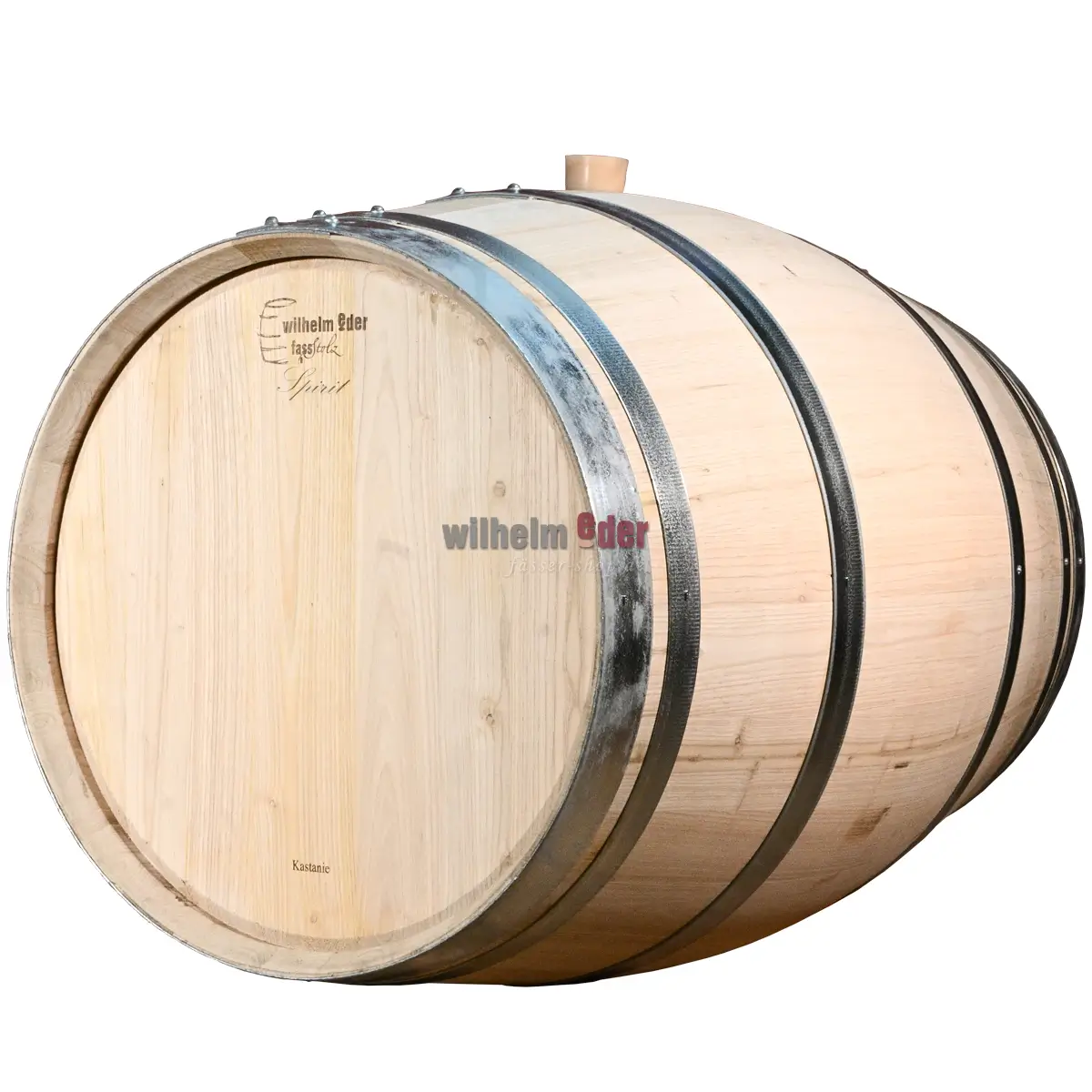
Barrique en bois de châtaignier 228 l avec bonde en silicone. Un baril équipé d'un double toast pour un volume et une puissance maximum. Pour un caractère élevé en bouche et en complexité. Idéal pour la maturation des céréales, du whisky et des eaux-de-vie. Ce sont les Romains qui nous ont probablement apporté la châtaigne du Caucase. Entre-temps, cet arbre qui aime la chaleur a élu domicile dans le sud de l'Allemagne et surtout dans la forêt du Palatinat.Dans ce contexte, aimer la chaleur ne signifie pas aimer la sécheresse !Notre bois pour notre série de tonneaux "Eder FassStolz® Kastanie" provient de l'une des plus belles et des meilleures régions d'Allemagne pour le châtaignier, la région du Wasgau près du château de Trifels au cœur de la forêt palatine !Année après année, avec la fin de la phase de végétation à partir d'octobre, novembre, nous sélectionnons avec les forestiers certains de ces arbres, parfois plusieurs centaines d'années, sous l'aspect de la durabilité et de la protection du climat, afin d'en tirer des vins et des fûts de distillat particulièrement précieux.D'ailleurs, le châtaignier a été l'arbre de l'année 2018 !Les fruits des arbres sont également utilisés dans les délices culinaires, que ce soit dans la soupe, le pain ou dans certains plats de gibier.Toast : SpiritMedium Plus Toast + Char 4Le fût est équipé de série d'une bonde en silicone.
Sweet chestnut (Castanea sativa)
Actually a very old barrel of wood, the Romans probably brought the chestnut from Asia Minor to our homeland. The Palatinate Forest in the Wasgau region is a special habitat for this tree species. The chestnut is a thermophilic tree, which may even have a future in the future forests of our homeland – but it also needs water! Chestnuts can be easily processed into barrels of all sizes and produce a woody, honey-scented aroma. Chestnut barrels give a good punch without the bitter tannins that characterize oak. In many deconstruction tastings in which chestnut casks are included in the blend, this type of wood proves to be a crowd favorite. It is particularly recommended for grain and whisky spirits, as well as for distillates with a particularly high starch content, such as a whisky with a predominantly maize component, bread distillates, etc. Chestnut can also be used in very distinctive distillates such as rowan or cherry, the latter in order to provide new approaches to maturation and flavor characterization. Here, the almond aromas go perfectly with the character of forest honey. Originally, chestnut wood was used to make large wine barrels, preferably barrels in which red wines were matured! We are currently working on a revival of chestnut and, compared to other special woods and compared to oak, already in significant quantities, even industrial customers have been convinced of the advantages of this wood!
Real walnut tree (Junglas Regia)
Whenever the opportunity arises, we buy walnut trees at the timber submissions, as we do with all other types of wood. It is a valuable wood that is often not easy to process into staves. There has recently been great demand from our customers in the distillate sector in particular, including for testing purposes in the wine and beer segment. The orders far exceed the supply of wild-grown trees that cannot be ordered. It is worth a try to use the barrels made from walnut wood for different types of fruit. Just as is done in the country richest in walnut trees, Kyrgyzstan. Here, in the shade of large wild walnut trees, numerous original orchard fruit varieties grow, which are naturally distilled and matured in barrels made of walnut.
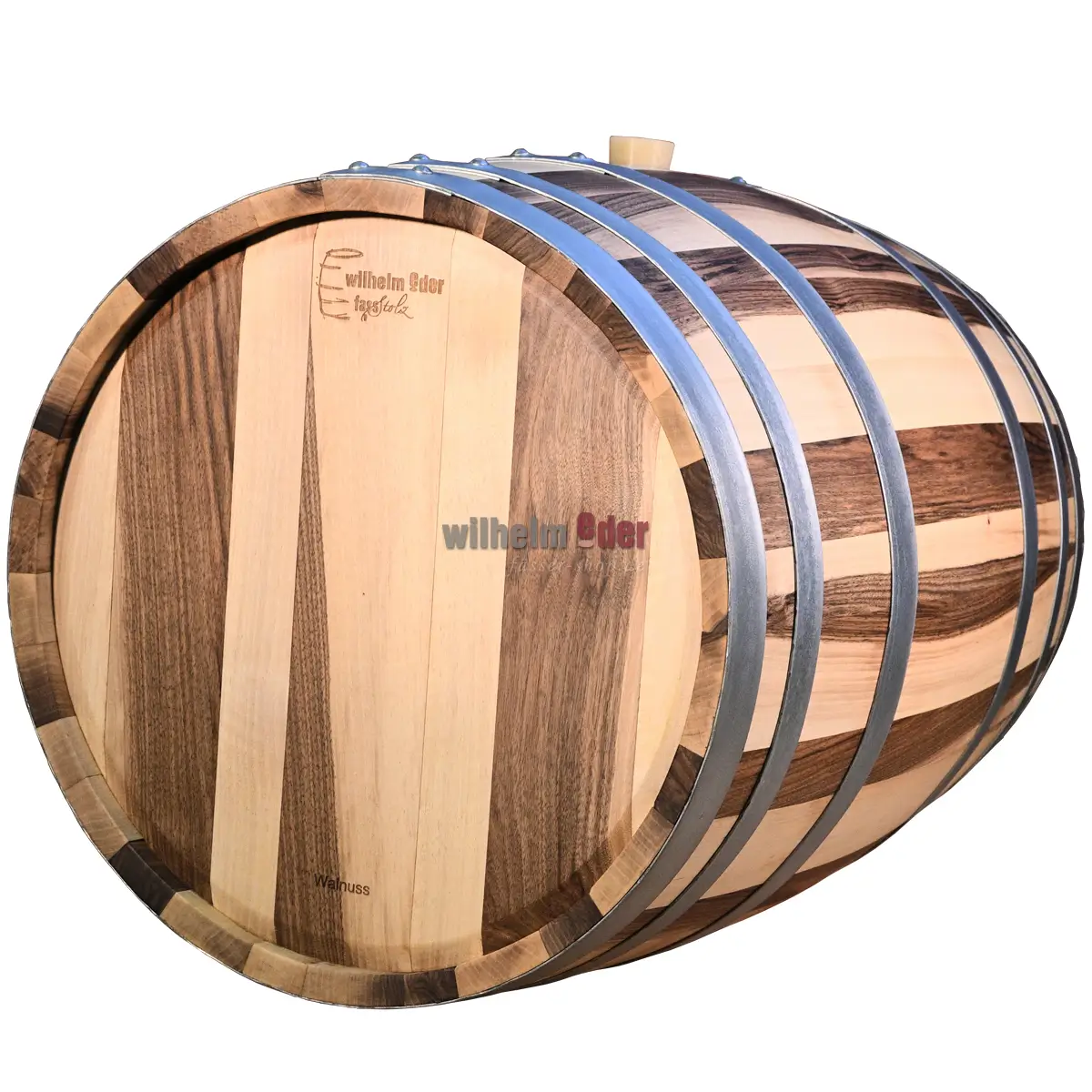
Le bois de noyer étant rare, Le délai de livraison peut varierFabriqué à notre tonnellerie dans une qualité artisanale à partir de noix séchées à l'air et à grain fin - très aromatique !Toast : MoyenAromatiques : nougat, noix grillées, caramelÉquipé de cercles galvanisés et d'une bonde en silicone.Fuites fréquentes - veuillez surveiller le tambour aussi souvent que nécessaireNous ne garantissons pas l'étanchéité !
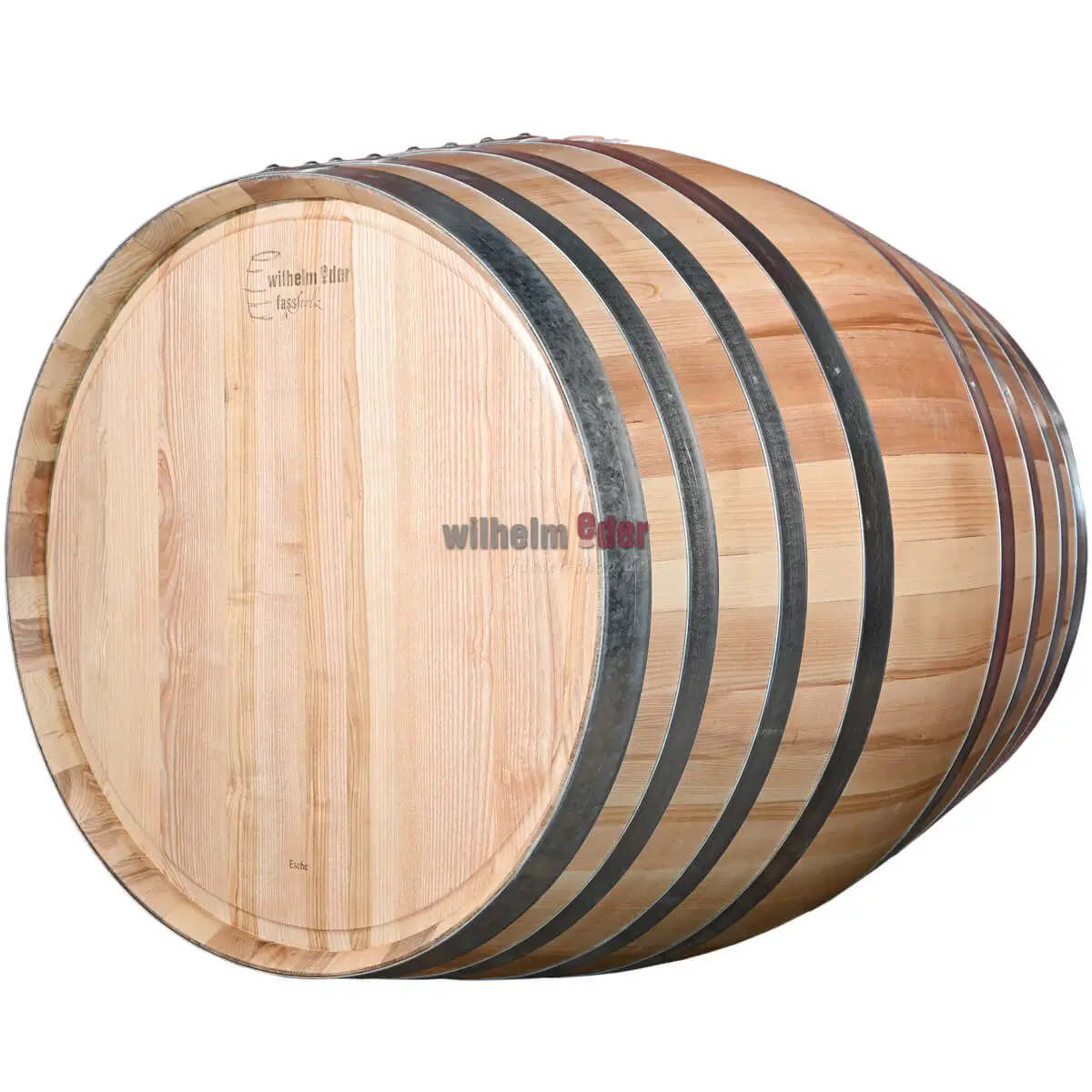
Depuis longtemps, un fût à distillat en bois de frêne (fraxinus excelsior) est apte à la maturation des distillats comme alcool de grain et eau-de-vie de fruits. Pour obtenir une maturation équilibrée ce bois, sans émission de couleur, travail avec microoxygénation réfrénée sans colorant. Le distillat mûrit dans son authenticité et prend un goût agréable et doux.
Common ash (Fraxinus Excelsior)
A wood that is often found in floodplain landscapes and moist stand areas. The ash is of great silvicultural importance. It is often planted to secure slopes, provided fodder in past decades and was often used to make bows, tools and sledges. In our segment, barrel making, ash was a very popular wood for softening distillates without giving them too much color or tannins and aromas. You can still find very old ash barrels in grain distilleries or fruit distilleries, for example, which are still in use, simply to give the product time to mature and marry with the air flowing in from outside. Ash has recently come back into fashion, and I’m particularly pleased about this – yes, in the small distillery segment for the delicately emerging “plant” of fruit brandies! Last but not least, I would like to introduce you to our new barrel, based on sustainability considerations.
Kiri wood
A distillate barrel, we are also experimenting with wine and beer barrels made from Kiri wood – the so-called imperial tree. Outside of the forestry law, this tree grows on plantations – similar to sugar beet or other types of fruit and is harvested after approx. 11 years as a stately tree with a diameter of approx. 500 mm. According to analytical and sensory evaluations, Paulowina Imperialis is a highly aromatic wood with a high cellulose and lignin content, which can already be surmised from the physique of the oversized leaves. Due to the high levels of lignin and hemicellulose, heat-reduced toastings, which can also be applied using electric heat and secondary heat sources (e.g. hot stones), prevent smoke aromas such as gujacol during toasting, but instead create high sugar molecules on the surface of the wooden barrel by breaking down the ingredients. As a result, wooden barrels are produced which, in contrast to barrels made from traditional types of wood and known toastings, offer high aromas in the form of sweetness and vanilla when matured with distillates, wines or beers.
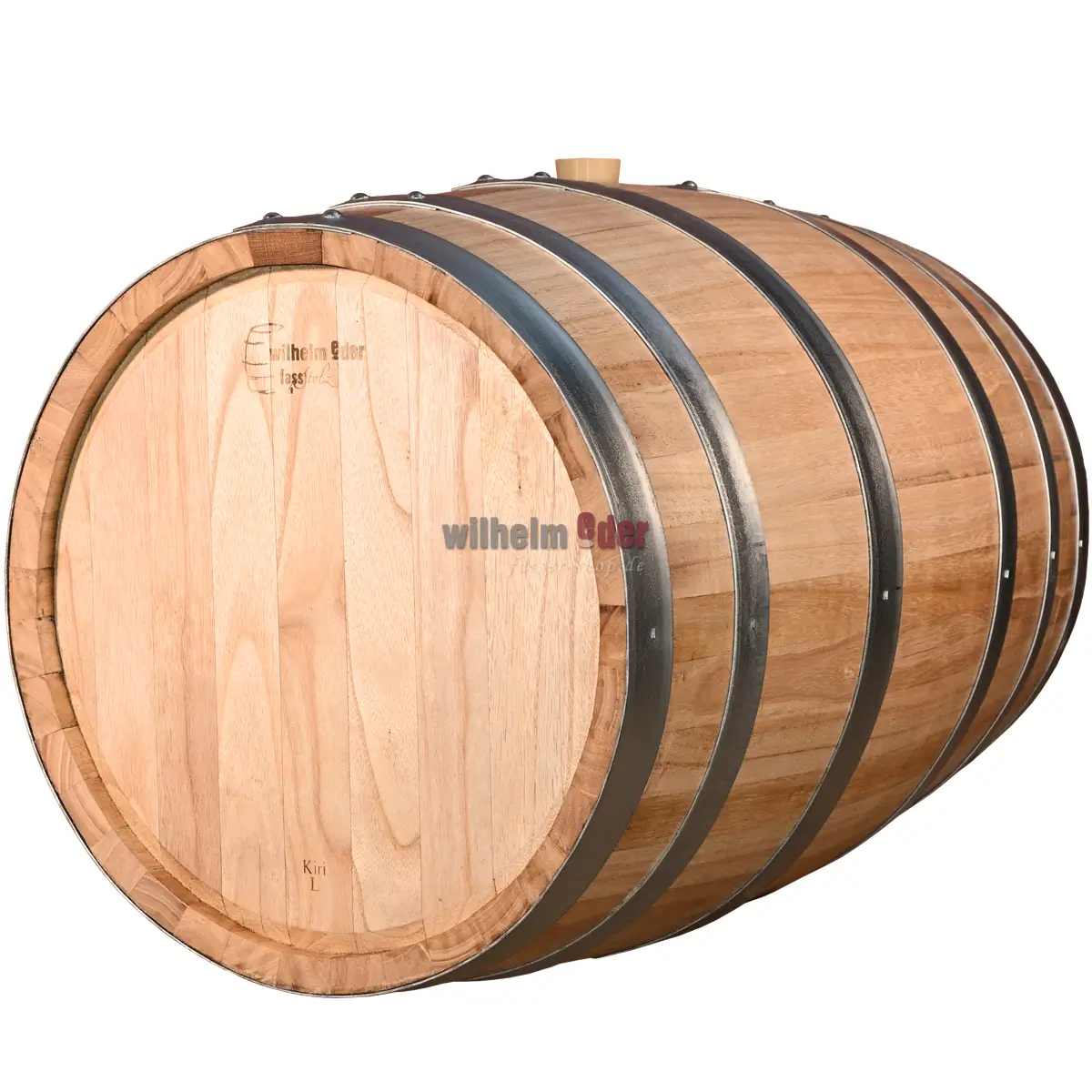
Ce fût est fabriqué en bois de kiri dans notre tonnellerie. Le bois de kiri est un bois très aromatique avec une teneur importante en cellulose et en lignine. Associé à un toast à chaleur réduite, il garantit une décomposition significative des molécules de sucre à la surface du bois tout en empêchant les arômes de fumée de gaïacol. Il en résulte des fûts en bois qui offrent des arômes puissants de douceur, de vanille et de fruits lorsqu'ils sont vieillis avec des distillats, des vins ou des bières. C'est sous le signe de l'innovation que nous fabriquons des fûts en bois de kiri. Le kiri, inconnu de beaucoup, est un bois de cerisier originaire d'Asie et est l'arbre le plus vigoureux du monde. Dans des conditions de croissance optimales, des entreprises innovantes allemandes plantent désormais ce bois particulier. Avec une croissance pouvant atteindre 5 mètres par an, le kiri produit du bois à une vitesse dix fois supérieure à celle du chêne. La production de fûts de kiri n'en est certes qu'à ses débuts, mais elle pourrait à l'avenir compléter les fûts fabriqués à partir de bois connus. Le bois provient d'une gestion durable et est séché à l'air et techniquement. Grillage: moyen Le fût est équipé de série d'une bonde en silicone. Fût expérimental : veuillez contrôler régulièrement votre fût pour détecter d'éventuelles fuites.
Bird cherry (Prunus Avium)
We often find this wild-growing tree in Germany’s low mountain ranges in considerable thickness and length. We can produce staves from these trunks for almost all barrel sizes up to 300 liters. Customers for these barrels, which we usually equip with a medium toast, can be found in the wine sector for Pinot Noir wines. This wood is also currently attracting a lot of attention among distillers, and new experiments are being made in the storage of gin.
Conclusion
The craft of cooperage is no longer tied to a single type of wood. Modern businesses can benefit from the sensory properties and characteristics of each individual species to create unique, competitive drinks.

Barrels made from special woods
Ces fûts en chêne japonais sont adaptés à un stockage prolongé des distillats. Le chêne japonais, ou chêne de Mizunara (Quercus Crispula), présente certaines particularités par rapport à ses parents européens ou américains : Il pousse très rarement droit, mais il a presque toujours une torsion, ce qui rend très difficile pour le tonnelier de construire un tonneau à partir de ce bois. Les arômes que dégage ce bois sont très intenses, surtout au début. Les arômes fins ne se développent qu'après un stockage plus long. Mais il présente alors un profil de goût sucré et épicé unique, qui est dû au ratio de lactone et à la forte teneur en vanille du chêne. Les arômes qui proviennent du chêne de Mizunara sont le kara (une sorte d'encens oriental), le bois de santal et la noix de coco. Volume : 250 l Origine du bois : Japon Découvrez les particularités de ce bois de fût dans notre blog.
Le bois de noyer étant rare, Le délai de livraison peut varierFabriqué à notre tonnellerie dans une qualité artisanale à partir de noix séchées à l'air et à grain fin - très aromatique !Toast : MoyenAromatiques : nougat, noix grillées, caramelÉquipé de cercles galvanisés et d'une bonde en silicone.Fuites fréquentes - veuillez surveiller le tambour aussi souvent que nécessaireNous ne garantissons pas l'étanchéité !
Ce fût est fabriqué en bois de kiri dans notre tonnellerie. Le bois de kiri est un bois très aromatique avec une teneur importante en cellulose et en lignine. Associé à un toast à chaleur réduite, il garantit une décomposition significative des molécules de sucre à la surface du bois tout en empêchant les arômes de fumée de gaïacol. Il en résulte des fûts en bois qui offrent des arômes puissants de douceur, de vanille et de fruits lorsqu'ils sont vieillis avec des distillats, des vins ou des bières. C'est sous le signe de l'innovation que nous fabriquons des fûts en bois de kiri. Le kiri, inconnu de beaucoup, est un bois de cerisier originaire d'Asie et est l'arbre le plus vigoureux du monde. Dans des conditions de croissance optimales, des entreprises innovantes allemandes plantent désormais ce bois particulier. Avec une croissance pouvant atteindre 5 mètres par an, le kiri produit du bois à une vitesse dix fois supérieure à celle du chêne. La production de fûts de kiri n'en est certes qu'à ses débuts, mais elle pourrait à l'avenir compléter les fûts fabriqués à partir de bois connus. Le bois provient d'une gestion durable et est séché à l'air et techniquement. Grillage: moyen Cercles: galvanisés à chaud Dimensions env : Volume Longueur des douelles Ø Tête Ø Vendre 30 l 50 cm 30 cm 38 cm 50 l 62 cm 34 cm 41 cm 112 l 76 cm 43 cm 53 cm 228 l 88 - 95 cm 56 cm 70 cm Le fût est équipé de série d'une bonde en silicone. Fût expérimental : veuillez contrôler régulièrement votre fût pour détecter d'éventuelles fuites.
Ce fût est fabriqué en bois de kiri dans notre tonnellerie.Le bois de kiri est un bois très aromatique avec une teneur importante en cellulose et en lignine.Associé à un toast à chaleur réduite, il garantit une décomposition significative des molécules de sucre à la surface du bois tout en empêchant les arômes de fumée de gaïacol.Il en résulte des fûts en bois qui offrent des arômes puissants de douceur, de vanille et de fruits lorsqu'ils sont vieillis avec des distillats, des vins ou des bières.C'est sous le signe de l'innovation que nous fabriquons des fûts en bois de kiri. Le kiri, inconnu de beaucoup, est un bois de cerisier originaire d'Asie et est l'arbre le plus vigoureux du monde. Dans des conditions de croissance optimales, des entreprises innovantes allemandes plantent désormais ce bois particulier. Avec une croissance pouvant atteindre 5 mètres par an, le kiri produit du bois à une vitesse dix fois supérieure à celle du chêne. La production de fûts de kiri n'en est certes qu'à ses débuts, mais elle pourrait à l'avenir compléter les fûts fabriqués à partir de bois connus.Le bois provient d'une gestion durable et est séché à l'air et techniquement.Grillage: moyenCercles: galvanisés à chaudLe fût est équipé de série d'une bonde en silicone.Fût expérimental : veuillez contrôler régulièrement votre fût pour détecter d'éventuelles fuites.
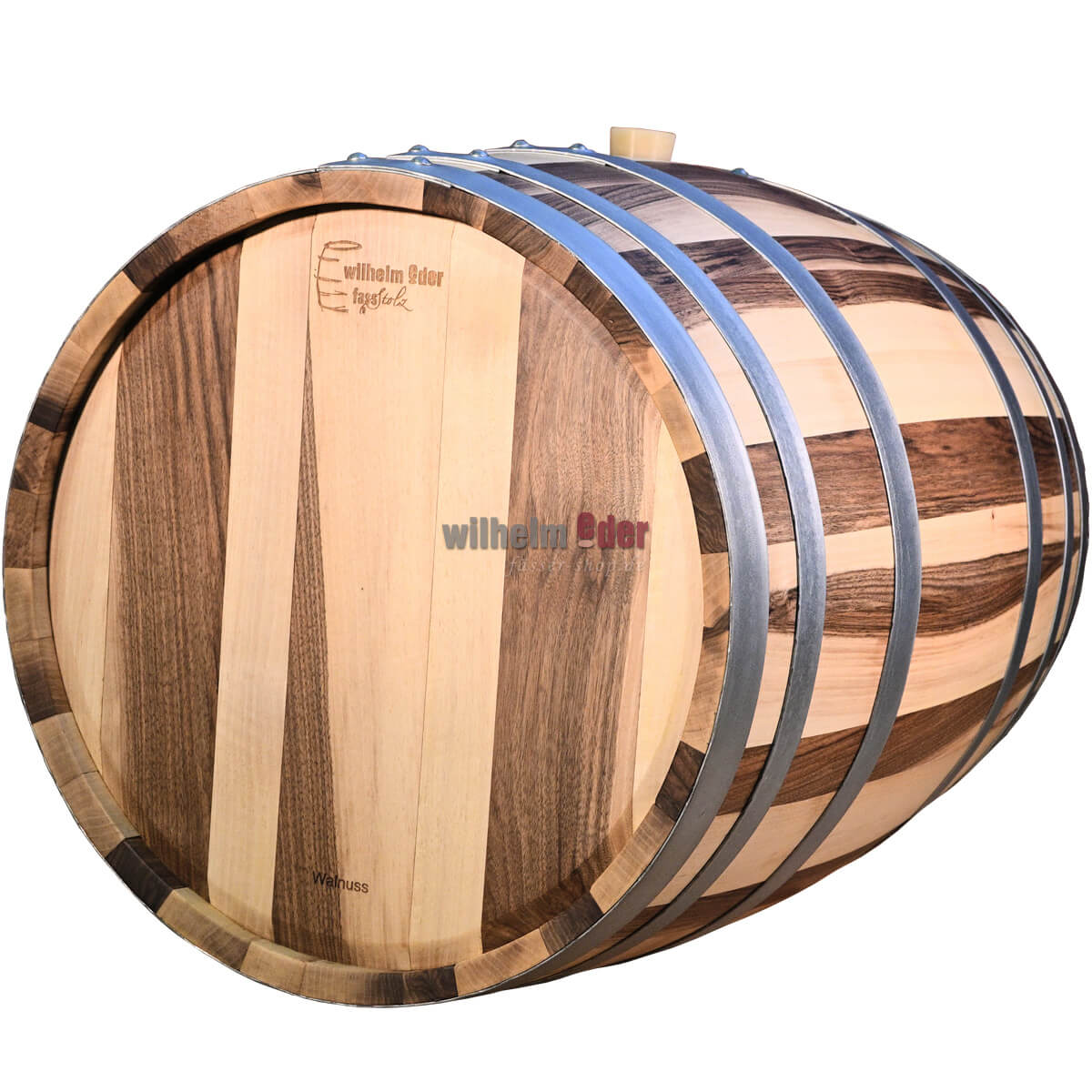
Le bois de noyer étant rare, Le délai de livraison peut varier Fabriqué à notre tonnellerie dans une qualité artisanale à partir de noix séchées à l'air et à grain fin - très aromatique ! Toast : Moyen Équipé de cercles galvanisés Aromatiques : nougat, noix grillées, caramel Fuites fréquentes - veuillez surveiller le tambour aussi souvent que nécessaire Nous ne garantissons pas l'étanchéité !
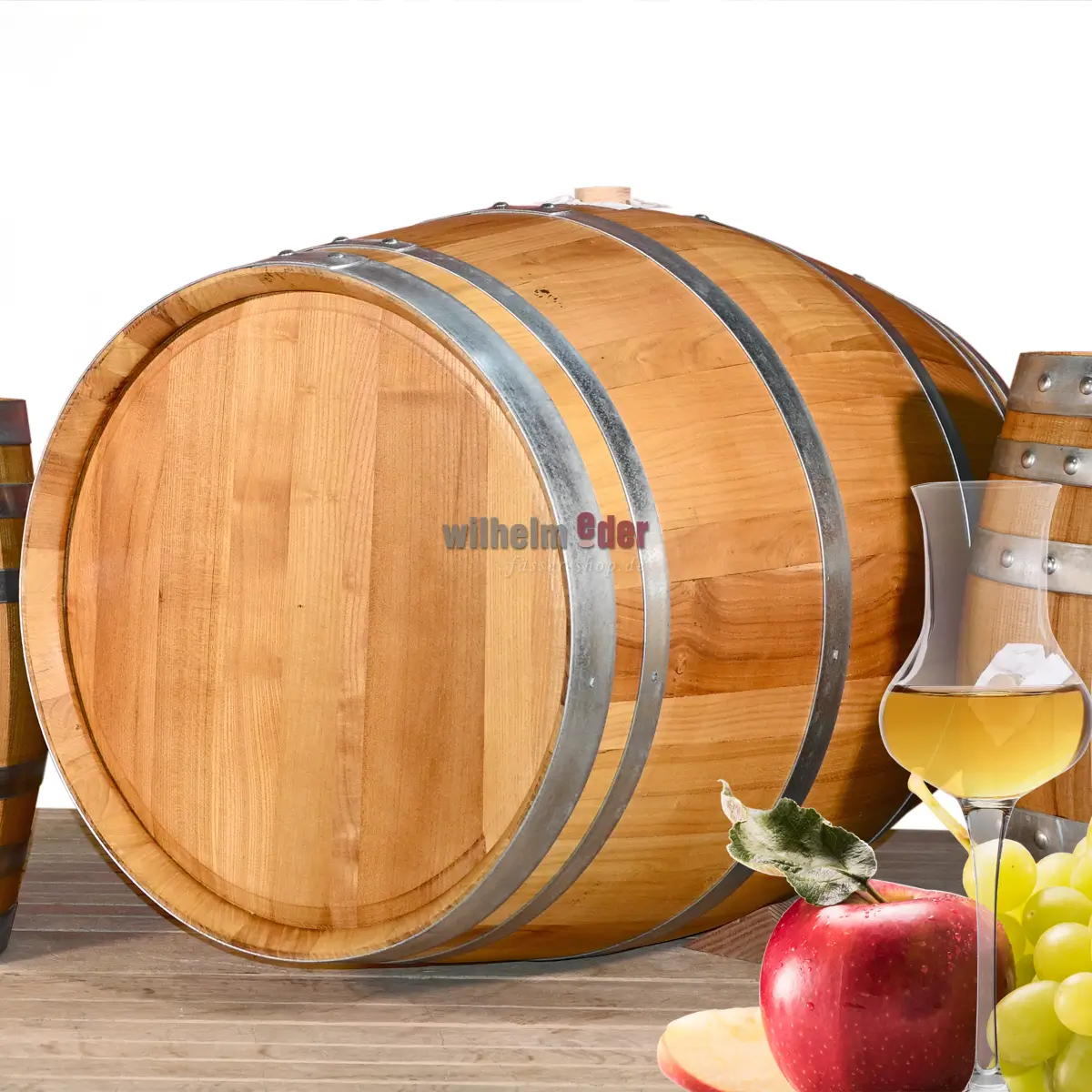
Fûts en bois de mûrier, intérieur légèrement toasté, extérieur brut, avec cerclage galvaniséLe bois de mûrier est parfaitement adapté à l'élevage des distillats de prunes ou d'autres fruits à noyau. Il se caractérise par une robe ambrée soutenue et des notes sucrées pendant la maturation. Egalement adapté au marc et aux vins de type grappa. .Contrairement à nos autres tonneaux de bois pour maturation, les tonneaux de bois de mûrier sont laqués à l'extérieur avec un vernis respirant et spécialement certifié pour ces tonneaux. Ce vernis soutient l'étanchéité de la caractéristique du bois de mûrier avec peu de micro-oxygénation.Avec support de série pour les tonneaux jusque 20 l. Si vous souhaitez un support vous pouvez le choisir dans la rubrique Accessoires dans laquelle vous pouvez également choisir un robinet en bois ou en acier affiné.Prenez en considération, le content nomé pour de futs de bois ne correspond avec la capacité net. La capacité peut être plus ou moins de content indiqué. Le différend est pas raison pour réclamer.
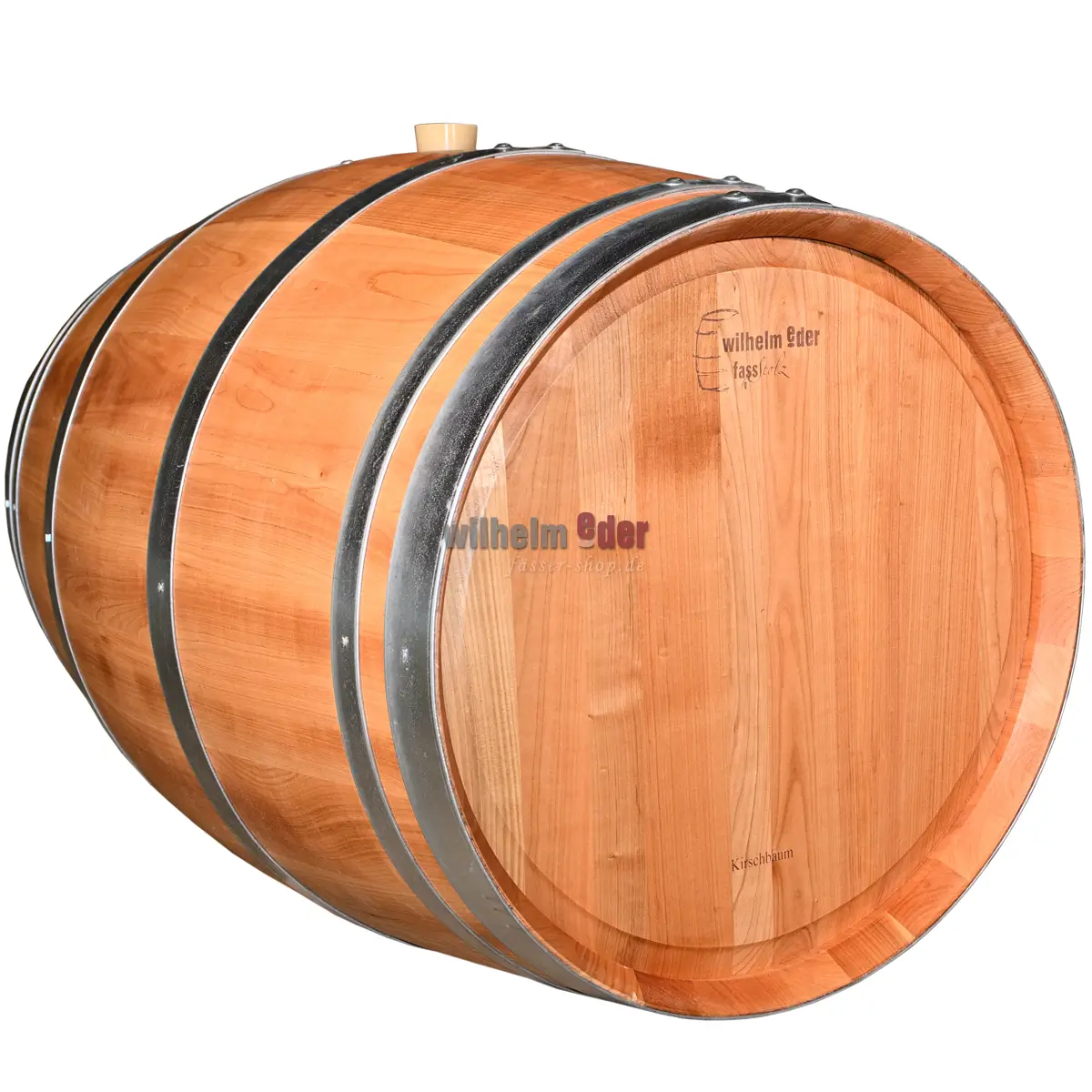
Fabriqués à partir de troncs de cerisiers sauvages du Prunus Avium. Les fûts sont équipés de cercles galvanisés à chaud, l'intérieur est légèrement grillé. De tout temps, kirsch est le goût le plus apprécié entre les fabricants. Et ce n’est pas seulement en raison du rendement du fruit, mais aussi parce qu’elle fait une partie importante de la culture culinaire de l’Allemagne et de la Suisse. Depuis 150 ans, on y apprécie les conditions climatiques spéciales et les états du sol dont les arbres de cerise ont besoin pour renforcer le déploiement aromatique des fruits. Ce n’est pas pour rien que la merise a été nommée l’arbre de l’année 2010. Ce sont des fruits à noyau appartenant aux rosacées. Le « kirsch » est caractérisé par le goût complexe qui dure longtemps après avoir gorgée ainsi que l’arome délicat et subtil. Lors des dégustations, les connaisseurs décrivent le goût souvent comme pulpeux, fruité, chocolat, suret épicé, fondant, vigoureux ou de noix épicé. Le plus important pour les fabricants est, d’ailleurs, la question si un « steinton », ça veut dire qu’un goût d’amande ou de massepain est désiré. La question si ce goût ou des kirsch purs doivent être ambitionnés est vivement discutée. Heureusement, on dirait dire. Car: Comme chacun sait, les gouts sont différents. Informations:Il n'est pas toujours facile de travailler avec le bois de cerisier dans la domaine de la distillation étant donner par la forme du cerisier.Nous traitons les petits fûts en bois de cerisier comme les grands fûts avec un vernis respirant et à base d'eau qui répond aux directives de l'industrie alimentaire et de la tonnellerie pour garantir l'étanchéité des fûts. Prenez en considération, le content nomé pour de futs de bois ne correspond avec la capacité net. La capacité peut être plus ou moins de content indiqué. Le différend est pas raison pour réclamer.
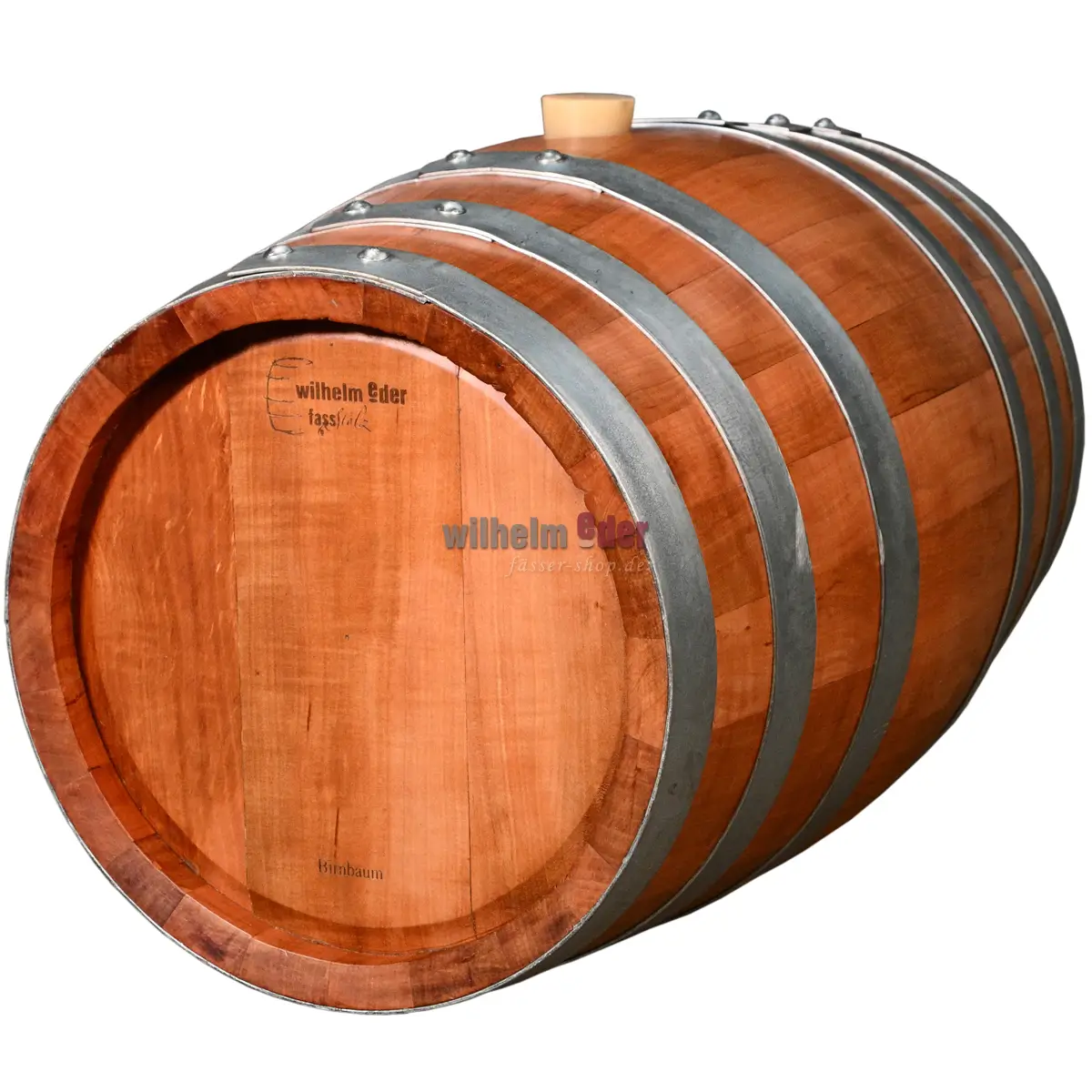
Une véritable particularité pour vos distillats ! Ces fûts ont été fabriqués dans notre tonnellerie à partir de troncs de poiriers sauvages Pyrus pyraster.Les fûts sont équipés de cercles galvanisés à chaud et l'intérieur est légèrement grillé. Remarque :Le bois de poirier dans le domaine des distillats n'est pas toujours facile à travailler, cela est conditionné par les formes de croissance du poirier.Afin de favoriser l'étanchéité, nous peignons les petits fûts en poirier, tout comme nos grands fûts, avec un vernis soluble à base d'eau qui laisse passer l'air et qui répond à toutes les exigences de certification dans l'industrie alimentaire et la construction de fûts.Veuillez noter que la taille nominale des fûts en bois ne correspond pas toujours à la contenance nette, qui peut être plus ou moins élevée. Les différences ne constituent pas un motif de réclamation.
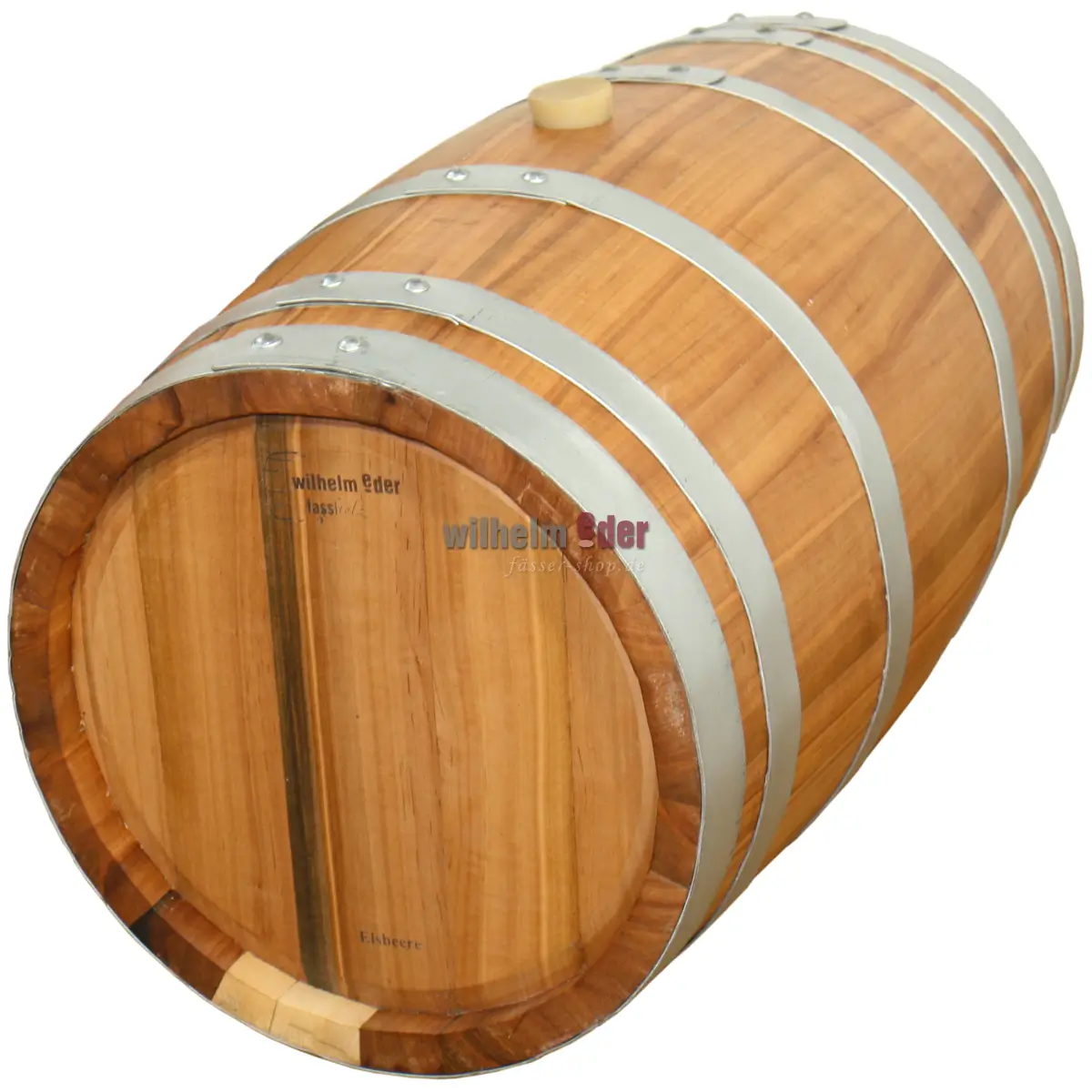
Un fût fabriqué dans notre tonnellerie sous notre propre marque EDER - FassStolz®. Le fût est composé exclusivement du bois feuillu séché à l'air de l'Elsbeere (Sorbus torminalis). Le fût spécial pour distillat est équipé de cercles galvanisés à chaud, traités avec une glaçure respirante et certifiée alimentaire à l'extérieur et légèrement grillés à l'intérieur. Origine : Allemagne de la sylviculture certifiée L'Elsbeere, entre autres choses aussi appelée "belle Else", est une espèce d'arbre à feuilles caduques rare. C'est l'un des arbres à feuilles caduques les plus chers et il fournit un bois de très haute qualité de couleur blanc-jaunâtre clair à légèrement rougeâtre. Le bois de Wild Service Berry est lourd, dur et résistant et possède des propriétés comparables à celles du chêne. La livraison s'effectue sans stock de fûts ni support.
